
Blog
Melanotan 1 Dosage Chart, Side Effects, and What the Research Shows in 2026

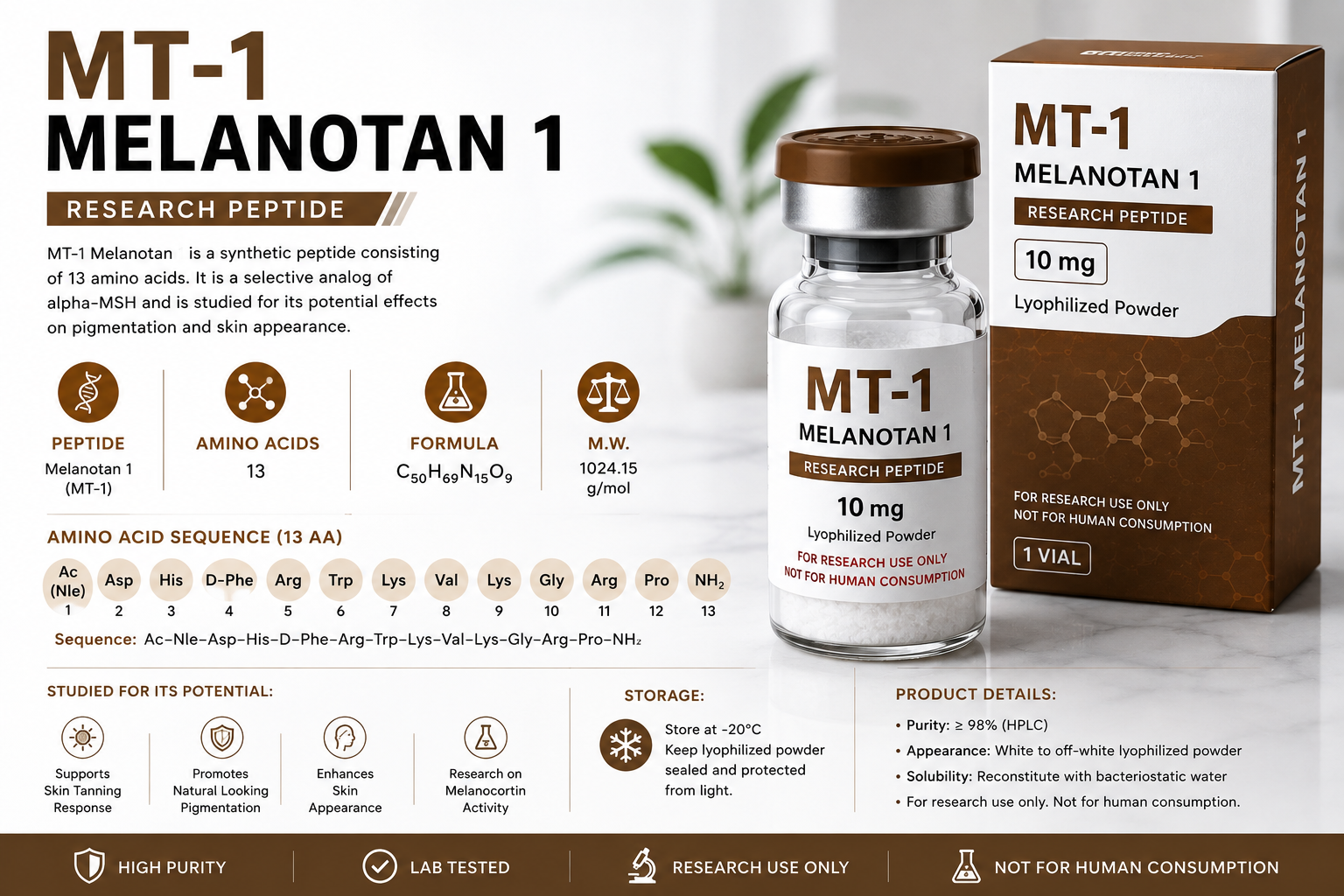
Looking for Melanotan 1 Dosage Chart? — the synthetic melanocortin peptide also known as afamelanotide — occupies one of the most unusual positions in the research peptide landscape. Unlike most compounds discussed in this space, it has achieved something concrete: FDA approval and EMA approval, Phase 3 clinical trial data published in JAMA Dermatology, and two decades of pharmaceutical development behind it under the brand name Scenesse.
Understanding Melanotan 1 dosage, its mechanism, its real clinical evidence, and the critical distinctions between the FDA-approved pharmaceutical product and unregulated research-grade vials is essential for anyone researching this peptide. This guide covers all of it — accurately, with the evidence that exists clearly labeled as such.
Regulatory context upfront: <cite index=”11-1″>Melanotan 1 (afamelanotide, Scenesse) is FDA-approved and EMA-approved for erythropoietic protoporphyria (EPP) in adults. Available only by prescription for that indication. As of April 2026, no other indication is approved.</cite> It is not approved for cosmetic tanning, skin darkening, or any other use in any major regulatory jurisdiction.
What Is Melanotan 1?
Melanotan 1 (afamelanotide, CUV1647) is a synthetic linear tridecapeptide analog of alpha-melanocyte-stimulating hormone (α-MSH). It is a selective MC1R agonist — meaning it primarily activates the melanocortin-1 receptor (MC1R) responsible for melanogenesis, with minimal activity at MC3R, MC4R, and MC5R. This selectivity gives it a significantly cleaner pharmacological profile compared to the non-selective Melanotan II.
Melanotan 1 was originally developed at the University of Arizona as part of a research program exploring synthetic melanocortin peptides for skin photoprotection. The original hypothesis: if melanogenesis (the production of protective skin pigment) could be stimulated pharmacologically without UV exposure, it might protect fair-skinned and photosensitive individuals from UV-induced damage.
That hypothesis eventually became Scenesse — the first and currently only approved melanocortin receptor agonist anywhere in the world.
Afamelanotide (Melanotan I) is a linear 13-amino-acid peptide with an open-chain structure. This linear structure contributes to its high receptor selectivity: unlike the cyclic Melanotan II, which engages multiple melanocortin receptor subtypes, Melanotan 1’s linear conformation fits preferentially into MC1R, the receptor specifically responsible for pigmentation in melanocytes.
How Melanotan 1 Works: The MC1R Mechanism
The MC1R receptor is expressed on melanocytes in the skin. When activated by Melanotan 1, melanocytes increase production of eumelanin — the dark, photoprotective pigment that absorbs UV radiation and scavenges free radicals. This is fundamentally different from pheomelanin (the reddish-yellow pigment that generates free radicals when exposed to UV). By shifting the melanin ratio toward eumelanin, Melanotan 1 provides genuine photoprotection beyond mere cosmetic darkening.
The mechanistic cascade works as follows:
- MC1R agonism: Melanotan 1 binds MC1R on melanocyte surfaces with high affinity and selectivity
- cAMP elevation: MC1R activation elevates intracellular cyclic AMP (cAMP) through adenylate cyclase
- MITF upregulation: Elevated cAMP activates the microphthalmia-associated transcription factor (MITF), the master regulator of melanocyte gene expression
- Melanogenic enzyme induction: MITF drives expression of tyrosinase and related enzymes critical for melanin synthesis
- Eumelanin production: The enzymatic cascade produces eumelanin — brown/black pigment that absorbs UV photons and quenches reactive oxygen species
This means increasing the dose does not progressively recruit MC3R, MC4R, or MC5R activity — you get more melanogenesis without proportionally more off-target receptor effects.</cite> This receptor selectivity profile is why Melanotan 1 has a substantially better tolerability profile than Melanotan 2, which activates multiple receptor subtypes and produces a broader range of systemic effects including sexual arousal (MC4R), appetite suppression (MC4R/MC3R), and nausea (MC5R/MC4R).
Clinical Evidence: Erythropoietic Protoporphyria (EPP)
The strongest and most important body of Melanotan 1 evidence comes from its approved indication: erythropoietic protoporphyria.
EPP is a rare genetic disorder affecting porphyrin metabolism. Patients with EPP are exquisitely sensitive to sunlight — even brief sun exposure causes severe, burning, and deeply debilitating photosensitivity pain. There is no cure, and management options before afamelanotide were limited to sun avoidance.
Phase 3 trial results (published in JAMA Dermatology):
A Phase III trial published in JAMA Dermatology found that afamelanotide (melanotan-1) produced nausea in 31% of participants, injection-site reactions in 22%, and headache in 18%. Yet the FDA approved it anyway. That’s not a contradiction — it’s a demonstration that safety isn’t binary. Afamelanotide’s mechanism delivers a clinically meaningful outcome (photoprotection in erythropoietic protoporphyria) with manageable, predictable adverse events when patients are properly selected and monitored.
The pivotal Phase 3 data showed:
- Significantly increased pain-free time in direct sunlight versus placebo
- Increased melanin density in skin (confirmed by reflectometry)
- Improved quality of life in EPP patients (reduced social restriction from sun avoidance)
- An acceptable, predictable safety profile in the monitored trial population
This trial data — not anecdote, not animal model research, but a Phase 3 randomized controlled trial — is what drove FDA approval in October 2019 and EMA approval in 2014.
Vitiligo Research
A 2020 study by Toh and colleagues, published in the Journal of the American Academy of Dermatology, extended findings to Asian patients with nonsegmental vitiligo and skin types IV-V, confirming efficacy and tolerability of the combination approach (afamelanotide + narrowband UVB) in a higher skin-type population. As of April 2026, afamelanotide is not FDA-approved for vitiligo. This research is ongoing and represents an off-label investigational use for an approved compound.
The vitiligo combination data is compelling: combining afamelanotide with narrowband UVB phototherapy has produced significantly better repigmentation outcomes than either treatment alone in published studies. The mechanistic rationale is clear — MC1R activation primes melanocytes for activity, and narrowband UVB then provides the stimulus for melanin synthesis, together achieving repigmentation that neither alone accomplishes as efficiently.
Emerging Research Areas
Afamelanotide has been studied in a Phase 2a feasibility trial in acute ischemic stroke patients (AIS within 24 hours of onset), assessing its potential neuroprotective properties as a novel agent. Six patients were enrolled, receiving 16mg subcutaneous implants.</cite> This represents the earliest stages of exploring afamelanotide beyond dermatology — at a very preliminary evidence level, but demonstrating the broader research interest in MC1R agonism and neuroprotection.
Melanotan 1 Benefits: What the Research Supports
Strength of evidence: Strong. Melanotan 1 (afamelanotide) has more robust clinical data than most research peptides, including Phase III trials, FDA approval for EPP, and published pharmacokinetic studies.
Summarizing the research-supported benefit profile:
Photoprotection in EPP (FDA-approved):
- Significantly increased pain-free sunlight exposure
- Reduced severity and frequency of phototoxic episodes
- Improved quality of life in a severely impacted patient population
Eumelanin-dominant skin pigmentation:
- Stimulates melanogenesis independently of UV exposure
- Shifts melanin ratio toward photoprotective eumelanin (rather than pheomelanin)
- Produces gradual, uniform pigmentation rather than rapid cosmetic darkening
Vitiligo repigmentation (investigational/off-label):
- Combined with narrowband UVB: significantly improved repigmentation vs either treatment alone
- Confirmed in multiple populations including skin types IV-V
- Not FDA-approved for this indication
MC1R selectivity advantage:
- Minimal off-target receptor activation compared to Melanotan 2
- Significantly better tolerability profile (no sexual arousal, less nausea than MT2)
- More predictable, uniform pigmentation response
Melanotan 1 Side Effects: The Clinical Safety Record
Studies show Melanotan 1 (afamelanotide) is FDA-approved for treating erythropoietic protoporphyria (EPP) and has undergone Phase 3 clinical trials demonstrating a known safety profile.
From the Phase 3 trial data and post-market surveillance:
Common adverse events (from Phase 3 data):
| Side Effect | Incidence in Phase 3 |
|---|---|
| Nausea | 31% |
| Injection-site reactions | 22% |
| Headache | 18% |
| Fatigue | ~15% |
| Skin hyperpigmentation (beyond target) | Variable |
| Freckle/mole darkening | Documented |
Onset timing: Most adverse events were transient, occurring in the days following implant insertion, and tended to resolve within 1–2 weeks.
Melanoma and melanocyte safety: MC1R variants are associated with increased melanoma susceptibility, and any compound that broadly stimulates MC1R raises the theoretical question of whether it could affect melanocyte proliferation. The clinical trial data from Scenesse do not demonstrate an increased incidence of melanoma. Nevertheless, dermatological monitoring for new or changing pigmented lesions during treatment is recommended as a standard clinical precaution. Patients with a personal or family history of melanoma, or with atypical mole syndrome, require particularly careful evaluation before initiating therapy.
As of April 2026, no serious organ toxicities attributable to afamelanotide have been identified in the approved clinical trial and post-market data.
The mole-darkening effect is worth specific mention: existing pigmented lesions, including moles and freckles, can darken during Melanotan 1 treatment. This is a cosmetic concern and a monitoring concern — any darkening of existing moles should prompt dermatological evaluation to confirm the change is benign. This monitoring is standard practice in the Scenesse clinical framework and should be replicated in any clinical use context.
Melanotan 1 Dosage: What Clinical Trials and Pharmaceutical Data Show
Given that Melanotan 1 dosage chart information is one of the most searched queries in this space, it’s critical to present dosing data accurately and in context.
The Pharmaceutical (Scenesse) Dosing Protocol
The Scenesse implant delivers 16 mg of afamelanotide over approximately 60 days via a bioabsorbable subcutaneous implant. Clinical trials demonstrated significant increases in melanin density, increased pain-free time in sunlight for EPP patients, and an acceptable safety profile.
The Scenesse implant protocol used in the Phase 3 trials and the approved product:
| Parameter | Scenesse (Pharmaceutical) |
|---|---|
| Dose per implant | 16 mg afamelanotide |
| Delivery mechanism | Bioabsorbable subcutaneous implant |
| Release duration | ~60 days |
| Insertion site | Subcutaneous, typically abdomen or upper arm |
| Administration | By trained healthcare professional only |
| Approved frequency | As needed for EPP photoprotection |
| Onset of melanogenic effect | 3–5 days post-implant |
| Peak pigmentation | 2–3 weeks post-implant |
Research-Grade Injectable MT1: Dosing Context
For research-grade injectable Melanotan 1 (which differs from the pharmaceutical implant formulation), the published research and clinical pharmacokinetic data provides reference information:
Research dosing protocols are derived from a combination of clinical trial data, pharmacokinetic studies, and community experience.
Research literature reference doses for injectable MT1 have typically ranged from 0.5 mg to 1.0 mg per injection, administered subcutaneously. However, because no standardized human clinical dosing protocol exists for injectable Melanotan 1 outside the EPP implant format, these figures represent literature reference points — not prescribing guidelines.
How long does Melanotan 1 take to work? Based on clinical trial and pharmacokinetic data: initial melanogenic effects (subtle pigmentation changes) typically appear within 3–7 days of administration. More visible pigmentation develops over 2–4 weeks, with the rate of change dependent on dose, individual skin type, baseline melanin level, and concurrent UV exposure. EPP patients in trials demonstrated measurably increased melanin density within the first week post-implant.
Melanotan 1 Reconstitution: What Research Context Shows
For research-grade lyophilized Melanotan 1, reconstitution follows standard peptide preparation principles:
- Reconstitution is typically performed using bacteriostatic water
- Injection volume per dose is determined by the reconstitution concentration chosen
- The reconstitution concentration directly determines the volume drawn per dose
A Melanotan 1 reconstitution calculator approach: if 10 mg of MT1 is reconstituted in 2 mL of bacteriostatic water, the resulting concentration is 5 mg/mL (or 5,000 mcg/mL). A 0.5 mg (500 mcg) dose would therefore require 0.1 mL drawn from the vial. Getting this calculation right matters significantly — errors in reconstitution concentration lead directly to dosing errors.
These reconstitution figures are provided as research reference information. Melanotan 1 is not approved for cosmetic tanning or self-administration in any jurisdiction.
The Critical Distinction: Pharmaceutical Scenesse vs Research-Grade MT1 Vials
This is the most important safety section in any honest Melanotan 1 guide.
Vendor Melanotan I vials should not be treated as approved afamelanotide. FDA approval applies to the specific afamelanotide product and indication, not research-labeled Melanotan I vials. Research-only products are not approved for human use.
Generic MT1 from unverified suppliers frequently contains MT2 contamination or degraded peptide fragments that produce unpredictable receptor activation.
The implications of this quality gap:
- MT2 contamination produces the non-selective receptor activation that causes nausea, unwanted erections, facial flushing, and appetite suppression — effects that shouldn’t occur with pure Melanotan 1
- Degraded peptide fragments may produce partial agonist activity or off-target effects that are entirely absent from the pharmaceutical product
- Concentration errors in research-grade vials mean the actual dose per injection may differ significantly from the labeled amount
- Sterility concerns with unregulated products are a genuine risk for subcutaneous injection
This means increasing the dose does not progressively recruit MC3R, MC4R, or MC5R activity — you get more melanogenesis without proportionally more off-target receptor effects</cite> — but only with a pure, correctly sequenced MT1 product. A contaminated or degraded product may not behave this way at all.
Melanotan 1 vs Melanotan 2: The Key Differences
These compounds are frequently conflated online despite being meaningfully different in structure, receptor selectivity, regulatory status, and risk profile. Understanding the distinction matters because the evidence for one does not apply to the other.
| Feature | Melanotan 1 (Afamelanotide) | Melanotan 2 |
|---|---|---|
| Structure | Linear 13-amino-acid peptide | Cyclic 7-amino-acid peptide |
| Primary receptor | MC1R (selective) | MC1R, MC3R, MC4R, MC5R (non-selective) |
| Pigmentation | Gradual, uniform eumelanin | Faster, less uniform |
| Sexual effects | None (no significant MC4R) | Yes — MC4R activation |
| Appetite suppression | Minimal | Documented (MC4R/MC3R) |
| Nausea | Moderate (Phase 3: 31%) | Higher incidence, more severe |
| FDA/EMA approval | Yes — EPP (Scenesse) | None anywhere |
| Evidence level | Phase 3 RCT + pharmaceutical approval | No approved trials; preclinical + anecdotal |
| Melanoma monitoring | Recommended | Critical |
As of April 2026, Melanotan II has no approved indication in the United States, the United Kingdom, the European Union, or any other major regulatory jurisdiction.
The selectivity difference is the core clinical distinction: Melanotan 1’s preference for MC1R means you get the melanogenic effect without the systemic effects that make Melanotan 2’s adverse event profile more complex. This is precisely why the pharmaceutical development program chose afamelanotide rather than Melanotan 2 for EPP treatment.
Storage and Handling
For research-grade Melanotan 1 lyophilized powder:
- Before reconstitution: Store at -20°C (freezer) for long-term stability; 2–8°C (refrigerator) for short-term use up to 4 weeks
- After reconstitution: Refrigerate at 2–8°C; use within 28 days; avoid repeated freeze-thaw cycles of reconstituted solution
- Protect from light: Melanotan 1 degrades with UV and visible light exposure; store in amber vials or wrapped in foil
- Temperature sensitivity: Never leave reconstituted solution at room temperature for extended periods
- Handling: Standard PPE for research chemical handling; avoid skin contact with concentrated solutions
- Quality verification: Batch-specific CoA confirming ≥99% HPLC purity, MS confirmation of correct 13-amino-acid sequence, endotoxin testing (critical for any injectable research application)
Frequently Asked Questions
What is Melanotan 1? Melanotan 1 (afamelanotide) is a synthetic analog of alpha-melanocyte stimulating hormone (α-MSH) that selectively activates the MC1R receptor on melanocytes, stimulating eumelanin production. It is FDA-approved and EMA-approved as Scenesse for erythropoietic protoporphyria (EPP) in adults.
What is the Melanotan 1 dosage used in clinical trials? The FDA-approved Scenesse formulation delivers 16 mg of afamelanotide via a bioabsorbable subcutaneous implant over approximately 60 days. Research-grade injectable MT1 protocols in the literature reference doses of 0.5–1.0 mg per injection subcutaneously, but no standardized injectable human dosing protocol exists outside the pharmaceutical implant format.
How long does Melanotan 1 take to work? Based on clinical trial data, initial pigmentation changes appear within 3–7 days of administration. More visible pigmentation develops over 2–4 weeks, with individual response varying based on skin type, dose, and UV exposure. Phase 3 trial participants showed measurably increased melanin density within the first week post-implant.
What are the Melanotan 1 side effects? From Phase 3 trial data: nausea (31%), injection-site reactions (22%), and headache (18%) were the most commonly reported. Most effects were transient. Darkening of existing moles and freckles has been documented and requires dermatological monitoring. No serious organ toxicities have been identified in clinical trial or post-market data as of 2026.
Is Melanotan 1 approved for tanning? No. Melanotan 1 (Scenesse) is FDA-approved only for erythropoietic protoporphyria. It is not approved for cosmetic tanning, skin darkening, or any other indication in any major regulatory jurisdiction.
What is the difference between Melanotan 1 and Melanotan 2? Melanotan 1 is a linear peptide selective for MC1R (melanogenesis only), giving it a cleaner side-effect profile. Melanotan 2 is a cyclic peptide activating MC1R, MC3R, MC4R, and MC5R — producing additional effects including sexual arousal and appetite suppression, along with more pronounced nausea. Melanotan 1 has FDA/EMA approval; Melanotan 2 has no regulatory approval anywhere.
Can I use a Melanotan 1 reconstitution calculator? Reconstitution calculators for MT1 work by determining the concentration per unit volume based on how much bacteriostatic water is added to a given mass of lyophilized peptide. If 10 mg is reconstituted in 2 mL, concentration is 5 mg/mL — a 500 mcg dose requires 0.1 mL. These are research reference calculations, not prescribing instructions.
Summary: Melanotan 1 in Context
Melanotan 1 (afamelanotide) stands apart from most research peptides discussed in this space because it has gone through the full pharmaceutical development process and emerged with genuine regulatory approval based on genuine Phase 3 clinical trial data. For EPP patients, it represents a meaningful, evidence-backed treatment for a condition that had very limited options before Scenesse.
Melanotan 1 (afamelanotide) has more robust clinical data than most research peptides, including Phase 3 trials, FDA approval for EPP, and published pharmacokinetic studies.
What it is not: a cosmetically approved tanning product, a validated self-administration protocol, or a research-grade vendor vial that can be equated with the pharmaceutical product. The clinical evidence applies to the pharmaceutical formulation administered in clinical settings — and the gap between that context and unregulated research-grade sourcing is real and matters for safety.
For those exploring the broader evidence landscape of peptides and skin health — including the well-documented role of collagen peptides in supporting dermal elasticity, skin density, and UV-related tissue repair — collagenpeptideseu.com provides a well-researched resource on the structural protein science that complements the melanocortin research covered here.
Authoritative External References:
- Langendonk JG et al. (2015). Afamelanotide for Erythropoietic Protoporphyria. New England Journal of Medicine. PMID: 26422723
- Minder EI et al. (2009). Afamelanotide, an agonistic analog of α-melanocyte-stimulating hormone, in dermal phototoxicity of erythropoietic protoporphyria. Expert Opinion on Investigational Drugs. PMID: 19236235
- Toh PPV et al. (2020). Afamelanotide plus narrowband UVB in nonsegmental vitiligo. Journal of the American Academy of Dermatology. PMID: 32603786
- FDA Approval Notice — Scenesse (afamelanotide) for EPP, October 2019. fda.gov
- EMA Assessment Report — Scenesse (afamelanotide). ema.europa.eu
This article is for informational and educational purposes only and does not constitute medical advice. Afamelanotide (Scenesse) is an FDA-approved prescription medicine available only through licensed prescribers for erythropoietic protoporphyria. Research-grade Melanotan 1 is not approved for human therapeutic use. Always consult a licensed healthcare provider before considering any melanocortin peptide therapy.