
Blog
5-Amino-1MQ Benefits, Research, and What the Science Actually Shows (2026).

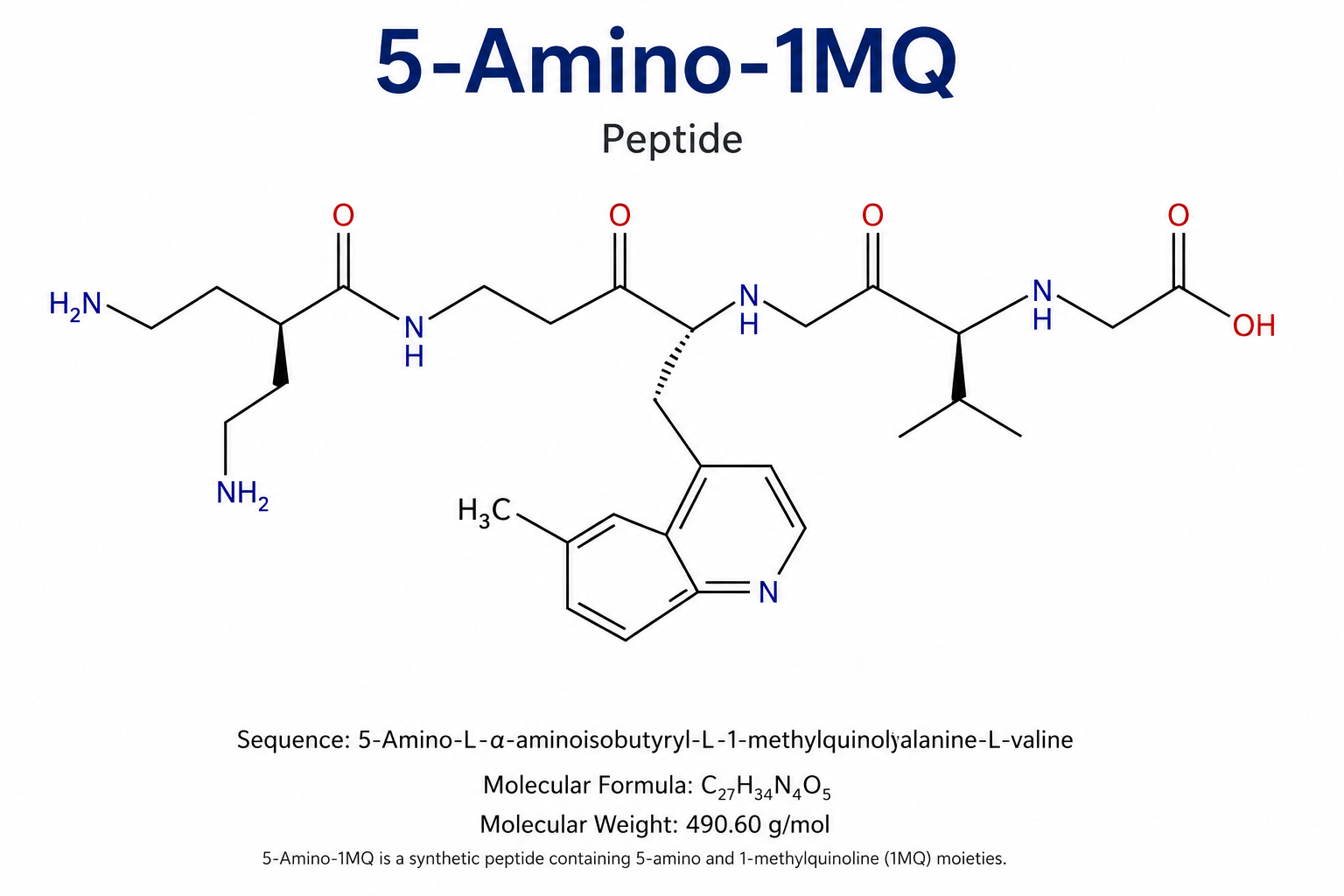
Looking fo 5-Amino-1MQ Benefits? 5-amino-1MQ is generating serious research interest as one of the most mechanistically novel metabolic compounds to emerge from academic biochemistry in recent years. Unlike most compounds in the metabolic health space — which work by suppressing appetite, mimicking hormones, or stimulating thermogenic receptors — 5-amino-1MQ operates at a fundamentally different level: inside the cell, at the enzyme responsible for one of the most overlooked metabolic bottlenecks in modern biology.
The result is a compound with a genuinely distinct mechanism, a growing body of preclinical evidence, and a research profile that has attracted attention from both longevity scientists and metabolic medicine researchers. It’s also a compound that’s widely misunderstood, frequently miscategorized, and sometimes overhyped.
This guide sets out to cover the 5-amino-1MQ benefits that are actually supported by evidence, how the compound works, what the current research does and doesn’t show, safety considerations, storage, and how it compares to related approaches in the metabolic research space.
Important disclaimer up front: <cite index=”10-1″>As of April 2026, 5-amino-1MQ has no FDA-approved indication, no IND (Investigational New Drug) application on the public record, and no registered Phase 1, 2, or 3 clinical trial published in the peer-reviewed literature or listed as completed on ClinicalTrials.gov.</cite> All benefit claims discussed in this article come from preclinical research — animal models and cell studies — not from completed human clinical trials. That distinction matters enormously for understanding what the current evidence actually supports.
What Is 5-Amino-1MQ?
<cite index=”12-1″>5-amino-1-methylquinolinium iodide (5-amino-1MQ) is a small-molecule inhibitor of nicotinamide N-methyltransferase (NNMT). Despite appearing in peptide-focused clinical practice discussions, 5-amino-1MQ is not a peptide — it is a small molecule.</cite>
This distinction is worth pausing on. Peptides are chains of amino acids. 5-amino-1MQ is a quinolinium-class small molecule — a category more closely related to pharmaceutical compounds like enzyme inhibitors than to the peptide blends and injectable fragments discussed elsewhere in research peptide communities. Its molecular weight is approximately 159.21 g/mol (as the active cation) or 286.11 g/mol in its more stable iodide salt form (CAS: 42464-96-0), making it considerably smaller than most peptides.
<cite index=”15-1″>Originally characterized by researchers at the University of Texas Medical Branch (UTMB), it is currently the most studied NNMT inhibitor for metabolic optimization.</cite>
The compound is typically supplied as a lyophilized crystal or powder at ≥99% HPLC purity and is formally classified as Research Use Only (RUO) — meaning it is intended for laboratory and preclinical research, not for human therapeutic use.
How Does 5-Amino-1MQ Work? The NNMT Mechanism Explained
To understand the 5-amino-1MQ benefits claimed in research, you need to understand the enzyme it targets: NNMT (Nicotinamide N-methyltransferase).
What NNMT Does — and Why It Matters
NNMT is an enzyme found primarily in fat cells (adipocytes) and various other tissues. Its job is to methylate nicotinamide — a form of vitamin B3 — converting it into 1-methylnicotinamide (1-MNA). This process consumes two critical cellular resources simultaneously:
- Nicotinamide, which is a precursor to NAD+ — one of the most important coenzymes in cellular energy production, DNA repair, and mitochondrial function
- S-adenosylmethionine (SAM), the body’s universal methyl donor, used in hundreds of methylation reactions involved in gene expression, neurotransmitter synthesis, and cellular repair
<cite index=”16-1″>This process is often called the “Methyl Sink” because it drains the cell of energy precursors.</cite>
When NNMT becomes overactive — which research shows occurs in obesity, metabolic syndrome, type 2 diabetes, and aging — it creates a two-pronged problem: NAD+ levels fall (impairing mitochondrial function and sirtuin activity) while SAM availability drops (impairing methylation capacity across the cell).
<cite index=”9-1″>Elevated NNMT is linked to conditions that compromise metabolic health, fat storage dysregulation, and reduced cellular energy capacity.</cite>
How 5-Amino-1MQ Addresses the NNMT Problem
<cite index=”16-1″>By inhibiting NNMT, 5-amino-1MQ prevents this drainage, theoretically increasing the pool of NAD+ available for sirtuin activation and mitochondrial function.</cite>
In practical terms, the proposed cascade looks like this:
- 5-amino-1MQ inhibits NNMT → less nicotinamide is consumed in methylation
- More nicotinamide is available → intracellular NAD+ levels rise
- Higher NAD+ → sirtuins (particularly SIRT1) become more active → improved mitochondrial biogenesis and fat oxidation
- More SAM preserved → improved methylation capacity across cellular processes
- Adipocyte signaling shifts → lipogenic gene expression downregulates, lipolysis increases
<cite index=”9-1″>By reducing NNMT activity, 5-amino-1MQ allows the body to maintain higher NAD+ levels, which can support better mitochondrial performance, improved fat oxidation, and more balanced energy metabolism.</cite>
What makes this mechanism particularly interesting from a research standpoint is that it targets the root cause of a specific metabolic bottleneck — overactive NNMT — rather than simply stimulating energy output or suppressing appetite. This is a mechanism-first approach to metabolic optimization that differs fundamentally from stimulant-based compounds, GLP-1 receptor agonists, or thermogenic agents.
5-Amino-1MQ Benefits: What Preclinical Research Shows
Fat Loss and Body Composition
The most extensively studied 5-amino-1MQ benefit in preclinical research is its effect on fat cell biology and body composition.
<cite index=”9-1″>One key study showed that mice treated with the molecule saw their fat cell size shrink by an impressive 30–40%. Even more interesting, this happened without any changes to their diet. The research also highlighted a significant reduction in deep abdominal visceral fat — the type of stubborn fat linked to metabolic issues that often resists traditional diet and exercise.</cite>
<cite index=”11-1″>A 2025 study in Biomolecules found that NNMT inhibitor treatment “reduces body weight, white adipose tissue mass, total cholesterol, and adipocyte size in obese mice.”</cite>
<cite index=”16-1″>Cellular assays (2017–2025) demonstrate that treated adipocytes show reduced volume and downregulated lipogenic gene expression.</cite>
The fat-loss mechanism here is importantly different from appetite suppressants or stimulants. Rather than reducing food intake or increasing sympathetic nervous system activity, 5-amino-1MQ appears to alter the metabolic programming of fat cells themselves — changing how they handle lipid storage and energy expenditure at the gene expression level.
NAD+ Elevation and Mitochondrial Function
<cite index=”11-1″>The most robust benefit of 5-amino-1MQ is metabolic enhancement through cellular energy optimization. Research shows NNMT inhibition dramatically improves how cells produce and utilize energy.</cite>
NAD+ is central to oxidative phosphorylation — the mitochondrial process that generates the vast majority of cellular ATP. It’s also the substrate for sirtuin enzymes (SIRT1–7), which regulate mitochondrial biogenesis, DNA repair, inflammation, and cellular stress responses. NAD+ declines with age and is further reduced by NNMT overexpression in metabolic disease — which is why NNMT inhibition has attracted attention as a potential longevity intervention, not just a metabolic one.
<cite index=”14-1″>The link between NNMT and cellular aging is an active area of investigation. NNMT expression has been observed to increase with age in certain tissues, suggesting that its inhibition could counteract age-related metabolic shifts. By preserving NAD+ levels, 5-amino-1MQ may help maintain cellular function and resilience, contributing to overall longevity.</cite>
Muscle Preservation and Sarcopenia Research
An emerging research direction for 5-amino-1MQ is skeletal muscle biology — particularly in the context of age-related muscle wasting (sarcopenia) and muscle loss during rapid weight reduction.
<cite index=”15-1″>Data published in Scientific Reports (2024) indicated that NNMT inhibition combined with exercise yields a 60% increase in grip strength compared to 40% with exercise alone, and significantly reduced recovery times.</cite>
<cite index=”15-1″>New 2025/2026 observational studies suggest 5-amino-1MQ helps preserve lean muscle mass in patients undergoing rapid weight loss via GLP-1 receptor agonists (e.g., semaglutide).</cite>
<cite index=”16-1″>2026 data suggest potential applications in reversing sarcopenia markers in aged tissue models.</cite>
This GLP-1 combination angle is particularly relevant given the widespread use of semaglutide and tirzepatide for weight management, where muscle mass loss alongside fat loss is an acknowledged concern. The potential for 5-amino-1MQ to preserve lean tissue during rapid weight loss represents one of the more practically significant research directions in this space.
Lipid Profile and Cardiovascular Markers
<cite index=”11-1″>Studies show improvements in cholesterol levels, triglycerides, and inflammatory markers. A 2025 study in Biomolecules found NNMT inhibitor treatment reduces total cholesterol and adipocyte size in obese mice. The lipid improvements appear to result from enhanced cellular metabolism rather than dietary changes alone, suggesting a fundamental improvement in how the body processes fats.</cite>
<cite index=”15-1″>Significant reductions in plasma total cholesterol and triglycerides have been observed in diet-induced obesity models.</cite>
What Is 5-Amino-1MQ Used For? Research Applications
<cite index=”9-1″>This compound is attracting attention for its ability to influence fat cell biology, energy metabolism, and even markers of healthy aging without relying on appetite suppression or stimulant-based mechanisms.</cite>
The current research applications of 5-amino-1MQ span several distinct fields:
- Obesity and metabolic syndrome research: Studying NNMT inhibition as a mechanism for reducing visceral adiposity and improving metabolic flexibility
- NAD+ biology and longevity research: Investigating the role of NNMT inhibition in preserving NAD+ pools and sirtuin activity as part of aging biology research
- Sarcopenia and muscle biology: Exploring whether NNMT inhibition can preserve or restore muscle mass in aged or GLP-1-treated models
- Metabolic-cardiovascular overlap: Examining effects on lipid profiles, inflammatory markers, and endothelial function in metabolic disease models
- GLP-1 combination protocols: Observational and early research into synergistic effects with GLP-1 receptor agonists for body composition preservation
5-Amino-1MQ Side Effects: What Research Reports
Because no completed human clinical trials exist for 5-amino-1MQ, the side effect profile is derived from animal model research and observational community reporting — neither of which constitutes a validated human safety dataset.
From what is currently known or suspected:
- Circadian/sleep effects: <cite index=”15-1″>Upregulation of NAD+ and ATP may cause mild insomnia or restlessness if administered in the evening.</cite> Morning administration is typically recommended in research protocols for this reason.
- Thermogenesis: <cite index=”15-1″>Potential for mild thermogenesis (increased body heat) or transient jitteriness, consistent with metabolic stimulation.</cite>
- Gastrointestinal: <cite index=”15-1″>Low incidence of mild nausea</cite> has been reported in some observational accounts.
- Methylation pathway interactions: <cite index=”10-1″>Concurrent medications that affect methylation pathways, folate metabolism, or SAM-dependent enzymes present unknown interaction risks — no drug interaction studies have been conducted.</cite>
Significant Research Gaps in Safety
<cite index=”10-1″>Known or suspected malignancy represents a specific concern — NNMT is expressed in multiple cancer types, and the effect of pharmacological NNMT inhibition on tumor biology in humans is unknown.</cite>
This oncological uncertainty is not trivial. NNMT is overexpressed in several tumor types, and its role in cancer metabolism is an active research area. Whether inhibiting NNMT would be beneficial, neutral, or harmful in the context of malignancy is genuinely unknown, and this represents one of the most important safety unknowns for the compound.
<cite index=”10-1″>Hepatic or renal impairment: pharmacokinetics under compromised organ function are uncharacterized.</cite>
The honest summary of the safety picture: the animal model research has not flagged major toxicity signals, but the compound has not been through Phase 1 human safety trials. Without that data, the human safety profile is genuinely unknown — not “probably safe” or “likely low risk,” but unknown.
5-Amino-1MQ Dosage: What Research Protocols Have Used
<cite index=”12-1″>The proposed fat loss mechanism operates through SAM and NAD+ preservation. Preclinical data support fat loss and metabolic benefits. Human clinical trial activity is emerging; completed efficacy trials are not yet established. There is no legitimate compounding or clinical access pathway in U.S. practice.</cite>
The dosing used in published preclinical research has varied by model, administration route, and endpoint studied. Because no approved human dosing exists — and because this compound is formally classified as Research Use Only — we are not publishing a dosing chart or per-day protocol here. Any dosing in a research context should be designed by qualified researchers familiar with the preclinical literature and operating within an appropriate research framework.
What the existing research confirms is that 5-amino-1MQ is membrane-permeable — meaning it can cross cell membranes efficiently without requiring injection — which is why oral administration has been studied in animal models alongside injectable routes. This oral bioavailability is one of the compound’s practical research advantages over injectable peptides.
5-Amino-1MQ vs Similar Research Compounds
| Compound | Mechanism | Primary Research Focus | Human Trial Status |
|---|---|---|---|
| 5-Amino-1MQ | NNMT inhibition → NAD+/SAM preservation | Fat loss, metabolic optimization, sarcopenia | No completed trials (2026) |
| NMN (Nicotinamide Mononucleotide) | NAD+ precursor supplementation | Aging, energy metabolism, cardiovascular | Phase 1/2 trials completed |
| NR (Nicotinamide Riboside) | Alternative NAD+ precursor | Aging, mitochondrial function | Phase 2 trials completed |
| Semaglutide (GLP-1 RA) | GLP-1 receptor agonism → appetite/insulin | Obesity, type 2 diabetes | FDA approved |
| Tirzepatide (GLP-1/GIP RA) | Dual receptor agonism | Obesity, type 2 diabetes | FDA approved |
The key distinction between 5-amino-1MQ and NAD+ precursors like NMN and NR is mechanistic: NMN and NR boost NAD+ by adding more precursor to the pathway; 5-amino-1MQ boosts NAD+ by blocking its depletion through NNMT. These are complementary rather than competing strategies — and some research has explored whether NNMT inhibition and NAD+ precursor supplementation might have additive or synergistic effects, though this remains early-stage research.
The comparison with GLP-1 agents is perhaps the most practically relevant for 2026, given the widespread use of semaglutide and tirzepatide. 5-amino-1MQ’s proposed muscle-preservation effect during GLP-1-driven rapid weight loss represents a potentially important niche — but one that is, as of now, supported only by observational data rather than controlled trials.
Storage and Handling
For laboratory and research use, 5-amino-1MQ in its iodide salt powder form should be:
- Stored at -20°C for long-term stability (up to 24 months, depending on supplier specification)
- Kept away from light and moisture, as both can degrade the compound over time
- Reconstituted in DMSO or sterile water depending on the research application and administration route
- Handled with appropriate PPE (gloves, eye protection) as with any research chemical of unknown full human safety profile
- Sourced with Certificate of Analysis (COA) confirming ≥99% HPLC purity and endotoxin testing, particularly if intended for any biological research application
Regulatory Status and Research Context
<cite index=”10-1″>As of April 2026, 5-amino-1MQ has not entered the FDA regulatory pathway. No IND application has been announced publicly, no Phase 1 trial has been registered on ClinicalTrials.gov, and the compound has no projected approval timeline.</cite>
This means 5-amino-1MQ is at an earlier regulatory stage than even early-stage investigational drugs like retatrutide or ARA-290 — both of which have at minimum entered human trials. It is a preclinical research compound, formally RUO, with no approved human use pathway in any major market as of mid-2026.
<cite index=”12-1″>Alternative evidence-based options exist for the underlying metabolic optimization goals patients typically pursue.</cite> For anyone working with a clinician on metabolic health, body composition, or NAD+ biology, approved and evidence-backed options (including GLP-1 therapies, NMN/NR supplementation with Phase 2 data, and lifestyle interventions) currently have a substantially stronger human evidence base.
5-Amino-1MQ and Collagen: The Broader Metabolic Picture
Metabolic research increasingly recognizes that body composition changes — particularly fat loss and muscle preservation — don’t occur in isolation from structural tissue health. As adipose tissue remodels and body weight shifts, the connective tissue, skin, and joint systems that provide structural support are also affected. Research on how collagen peptides support skin elasticity, joint integrity, and connective tissue health during periods of significant body composition change is an active and relevant complement to the metabolic compound research covered here. If you’re exploring the broader evidence base for tissue-level support during metabolic interventions, collagenpeptideseu.com provides a well-researched resource on collagen peptide science and its intersection with structural health.
Frequently Asked Questions
What is 5-amino-1MQ and what is it used for? 5-amino-1MQ (5-amino-1-methylquinolinium) is a small-molecule inhibitor of the enzyme NNMT (nicotinamide N-methyltransferase). It is used in preclinical research to study the effects of NNMT inhibition on NAD+ levels, fat cell metabolism, body composition, and aging biology. It is not a peptide, not FDA-approved, and not available for human therapeutic use.
What are the main 5-amino-1MQ benefits shown in research? Preclinical studies have demonstrated reduced adipocyte (fat cell) size and visceral fat accumulation, improved NAD+ levels and mitochondrial function, better lipid profiles in obese animal models, and potential muscle preservation effects. All these findings come from animal models and cell studies — no completed human clinical trials exist as of 2026.
Is 5-amino-1MQ a peptide? No. Despite being frequently discussed alongside research peptides, 5-amino-1MQ is a small molecule — specifically a quinolinium-class NNMT inhibitor. It is not a peptide chain of amino acids.
What are the side effects of 5-amino-1MQ? Because no human clinical trials have been completed, the full side effect profile is unknown. From animal research and observational reports, potential effects include mild insomnia if taken in the evening (due to NAD+ and ATP elevation), mild thermogenesis or jitteriness, and occasional nausea. A significant unknown is its effect in people with cancer or malignancy risk, given NNMT’s role in tumor biology.
Is 5-amino-1MQ FDA approved? No. As of mid-2026, 5-amino-1MQ has no FDA approval, no active IND application, and no registered clinical trials on ClinicalTrials.gov. It is formally classified as Research Use Only (RUO).
How does 5-amino-1MQ differ from NMN or NR? NMN and NR boost NAD+ by supplying more precursor material to the NAD+ synthesis pathway. 5-amino-1MQ boosts NAD+ by blocking its depletion via NNMT inhibition — a different entry point into the same pathway. The two approaches are mechanistically complementary rather than redundant.
What is an injection protocol for 5-amino-1MQ? Because 5-amino-1MQ is membrane-permeable and has been studied in oral form in animal models, it does not require injection in the way that many peptides do. For research purposes, dosing protocols vary by model, endpoint, and administration route. We do not publish specific dosing protocols for this compound given its RUO classification and absence of approved human use guidelines.
Summary: What 5-Amino-1MQ Is — and Isn’t
<cite index=”13-1″>The strongest evidence so far comes from animal and cell models, so this should be read as a research review, not a clinical recommendation.</cite>
5-amino-1MQ’s mechanism is genuinely novel and scientifically well-grounded — NNMT’s role in metabolic dysfunction is established biochemistry, and the logic of inhibiting it to preserve NAD+ and SAM is sound. The preclinical results, particularly on visceral fat reduction and adipocyte biology, are meaningful data points from credible research groups.
What 5-amino-1MQ is not — yet — is a compound with a validated human safety and efficacy profile. <cite index=”9-1″>While it’s still early in human research, the pathways it targets are well-documented in metabolic science, and the results so far are promising.</cite> That’s an accurate characterization: promising preclinical data, documented mechanism, and a genuinely interesting research compound — that has not yet been tested in humans in any registered clinical trial.
For researchers studying NNMT biology, NAD+ metabolism, or metabolic disease at the cellular level, 5-amino-1MQ is one of the most interesting small molecules in the current literature. For anyone else, the honest answer is that the evidence trail currently ends at animal models, and the human chapter of this compound’s story is still unwritten.
Authoritative External References:
- Neelakantan H, et al. (2018). Selective and membrane-permeable small molecule inhibitors of nicotinamide N-methyltransferase reverse high fat diet-induced obesity in mice. Biochemical Pharmacology. PMID: 29155147
- Liu M, et al. (2021). Roles of Nicotinamide N-Methyltransferase in Obesity and Type 2 Diabetes. BioMed Research International. PMID: 34368359
- Kannt A, et al. (2022). Reduced calorie diet combined with NNMT inhibition establishes a distinct microbiome in DIO mice. Scientific Reports. PMID: 35013352
- Zhang W, et al. Nicotinamide N-Methyltransferase in Cardiovascular Diseases. Metabolites (ongoing research series)
- ClinicalTrials.gov — NAD+ metabolism and NNMT inhibitor trial registry
This article is for informational and educational purposes only and does not constitute medical advice. 5-amino-1MQ is classified as Research Use Only (RUO) and is not approved for human therapeutic use in the US, UK, EU, or Australia. No completed human clinical trials exist for this compound. Always consult a licensed healthcare provider before considering any investigational compound or metabolic intervention.