
Blog
SS-31 Peptide Benefits, Research Dosage, FDA Status, and What the Science Actually Shows (2026)

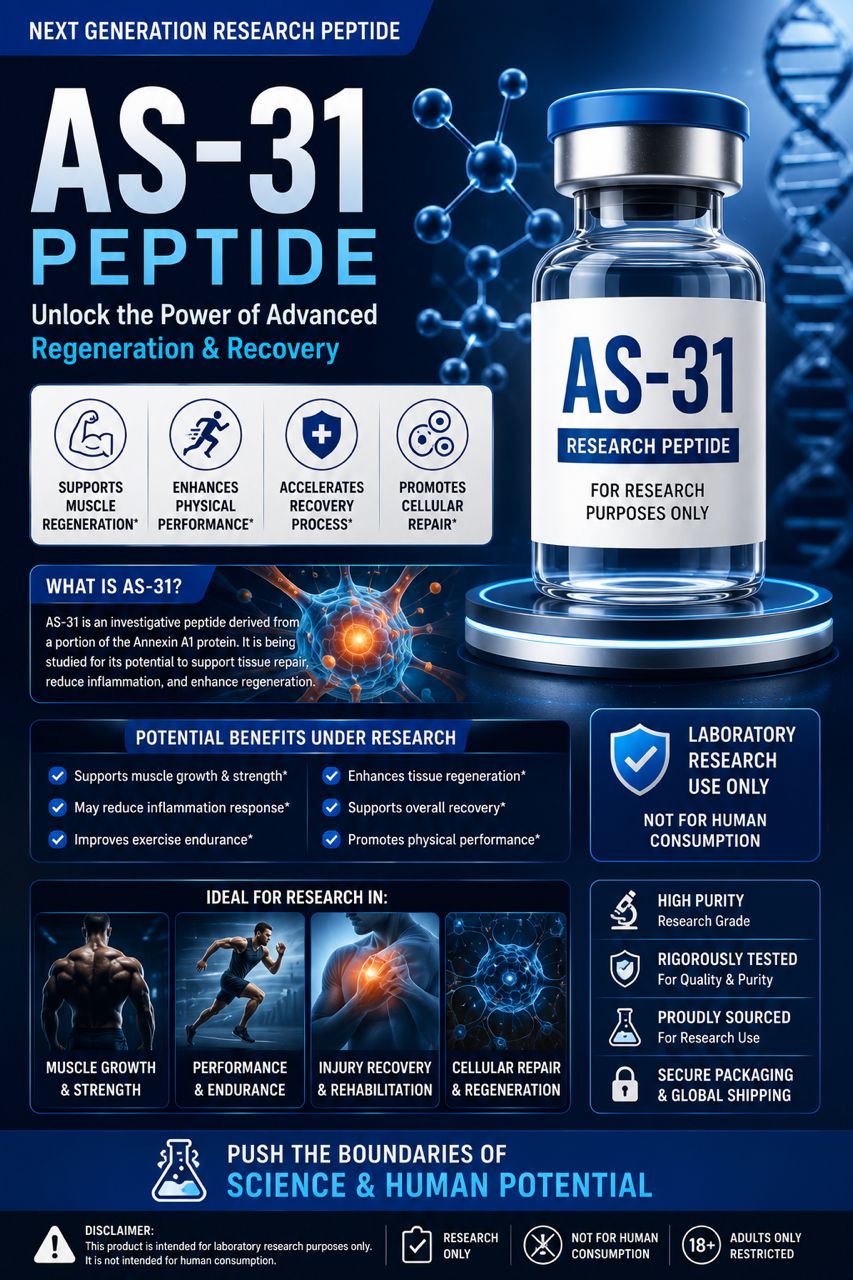
looking for ss-31 peptide benefits? Few compounds in mitochondrial research have generated as much attention — or as much confusion — as SS-31. Between its connection to a newly approved prescription drug, ongoing clinical trials in heart failure, and widespread use as a research compound, separating fact from marketing hype matters more than ever. This guide breaks down the real science, the current regulatory status, and what researchers and consumers alike need to understand before engaging with this peptide.
What Is SS-31?
SS-31 is a synthetic, cell-penetrating tetrapeptide — a chain of just four amino acids — designed to target the inner mitochondrial membrane. Its research code is SS-31 (sometimes written SS 31 or ss-31), and its generic pharmaceutical name is elamipretide. It has also been referred to in earlier research literature as MTP-131 and Bendavia. There are a lot of ss-31 peptide benefits.
Unlike most therapeutic peptides, which act on cell-surface receptors, SS-31 works inside the cell. It binds to cardiolipin, a phospholipid found almost exclusively in the inner mitochondrial membrane. Cardiolipin is structurally essential — it helps organize the protein complexes responsible for producing ATP, the energy currency of every cell in the body.
This mechanism is central to understanding SS-31 and mitochondrial dysfunction. As cells age or come under metabolic stress, cardiolipin becomes damaged or peroxidized, the mitochondrial inner membrane (cristae) loses its folded structure, electron transport chain efficiency drops, and reactive oxygen species (ROS) accumulate. This cascade is implicated in heart failure, kidney disease, neurodegenerative conditions, age-related muscle loss, and metabolic decline more broadly. By stabilizing cardiolipin, SS-31 is theorized to interrupt this cascade at its source rather than simply mopping up oxidative byproducts after the fact.
SS-31 FDA Approval: What’s Actually Approved (2026 Update)
This is the area where the most misinformation circulates, so it’s worth being precise.
SS-31 — under its FDA-approved brand name Forzinity — received accelerated FDA approval on September 19, 2025. The approval is specific and narrow: it covers the improvement of muscle strength in adult and pediatric patients with Barth syndrome, a rare, life-limiting genetic mitochondrial disorder, in patients weighing at least 30 kg. Forzinity has been commercially available through specialty pharmacy channels since December 2025.
That is the entire scope of current approval. Every other application — heart failure, kidney protection, dry age-related macular degeneration, mitochondrial myopathy, athletic recovery, or general longevity use — remains investigational and off-label.
There is meaningful movement on at least one of these fronts. Elamipretide’s developer has submitted trial data from the PROGRESS-HFpEF Phase 3 study in heart failure with preserved ejection fraction, and the FDA has granted Priority Review with a PDUFA target action date in September 2026. If approved, this would mark the first mitochondria-targeted therapy for this form of heart failure — but as of mid-2026, that approval has not yet happened, and trial outcomes don’t guarantee a positive review.
The practical takeaway: if you see SS-31 marketed for bodybuilding, anti-aging, or general wellness with claims of “FDA approval,” that approval does not extend to those uses. The approved drug is a prescription-only product for a specific rare disease, available exclusively through a specialty pharmacy with a confirmed diagnosis.
SS-31 Peptide Benefits Reported in Clinical and Preclinical Research
Research interest in SS-31 spans several areas, though the strength of evidence varies considerably depending on the application: (ss-31 peptide benefits)
- Cardiac function: In the PROGRESS-HFpEF trial, elamipretide showed measurable improvement in six-minute walk distance among heart failure patients with confirmed mitochondrial dysfunction. Earlier trials reported improvements in peak oxygen consumption (VO₂) after short courses of IV administration.
- Skeletal muscle energetics: Phase 2 data in primary mitochondrial myopathy patients showed meaningful increases in measured skeletal muscle ATP production, alongside patient-reported improvements in fatigue and function.
- Barth syndrome: This is the only indication with full regulatory approval, based on demonstrated improvements in muscle strength in clinical trials.
- Cellular senescence: Preclinical research suggests SS-31 may help cells clear damaged mitochondria rather than allowing them to accumulate and generate ongoing oxidative stress — a mechanism of interest in broader aging research.
It’s worth being direct about what this means for the SS-31 peptide bodybuilding community specifically: there is currently no controlled clinical evidence supporting SS-31 use for muscle building, fat loss, or athletic performance enhancement in healthy individuals. The available data comes from patients with diagnosed mitochondrial disease, not healthy athletes. Anecdotal reports circulating in longevity and biohacking communities are not a substitute for controlled trials, and should be weighed accordingly.
SS-31 Peptide Dosage and Dosage Chart: What the Research Actually Used {ss-31 peptide benefits}
Because dosing questions are so common, it’s important to separate approved clinical dosing from research-use information — these are not interchangeable, and this section is provided for informational and research-context purposes only, not as guidance for self-administration.
Approved Forzinity dosing (Barth syndrome, per FDA label):
- 40 mg administered subcutaneously, once daily, at approximately the same time each day
- This is a prescription regimen, used only under physician supervision for diagnosed Barth syndrome patients
Dosing used across other clinical trials (investigational, not approved for general use):
- Subcutaneous research protocols have used a range of approximately 0.1–2 mg/kg daily, depending on the trial and indication
- IV infusion protocols in heart failure trials used roughly 0.01–0.25 mg/kg/hour over a 4-hour infusion window
These figures appear frequently in searches for ss-31 dosage chart and ss-31 peptide dosage per day, but they describe controlled trial parameters administered under medical supervision with monitoring — not a template for unsupervised use. Mitochondrial-targeted peptides interact with core cellular energy systems, and dosing outside a clinical or research-lab context carries risks that haven’t been systematically studied in healthy populations.
SS-31 Peptide Side Effects
Across published clinical trials, elamipretide has generally shown a favorable tolerability profile compared to many investigational compounds. The most frequently reported side effects include:
- Injection-site reactions (redness, irritation, mild discomfort)
- Headache
- Mild gastrointestinal symptoms in some patients
Serious adverse events have been relatively uncommon in trial populations, but it’s worth noting that most published safety data comes from supervised clinical settings with regular monitoring — not from unsupervised, self-administered use, where side effect tracking and dose accuracy can’t be guaranteed.
SS-31 and MOTS-c: How They Compare
Researchers frequently study SS-31 and MOTS-c alongside one another because both are mitochondrial-targeted peptides, but their mechanisms differ substantially: Check out SS-31 and MOTS-c.
| SS-31 (Elamipretide) | MOTS-c | |
|---|---|---|
| Origin | Fully synthetic peptide | Mitochondrial-derived peptide, naturally encoded in mitochondrial DNA |
| Primary target | Cardiolipin (inner mitochondrial membrane) | Metabolic regulation, AMPK pathway activation |
| Regulatory status | FDA-approved (Forzinity) for Barth syndrome only; other uses investigational | Research-use compound only; no FDA approval for any indication |
| Primary research focus | Cardiac and skeletal muscle mitochondrial function | Metabolic homeostasis, insulin sensitivity, exercise physiology |
The two are sometimes discussed together in longevity research because they approach mitochondrial support from different angles — structural stabilization (SS-31) versus metabolic signaling (MOTS-c) — but they are not interchangeable, and combining research compounds without supervision compounds the uncertainty around safety and interactions.
Where SS-31 Research Material Is Sourced
A genuine shift has occurred in the SS-31 landscape since the September 2025 approval. Prior to approval, SS-31 was available almost exclusively through research-peptide suppliers as lyophilized vials intended for laboratory use. Following approval, the regulatory picture has become more complex: the approved drug (Forzinity) is a prescription-only product distributed through specific specialty pharmacy channels, while non-pharmaceutical “research peptide” SS-31 — the kind referenced in searches for ss-31 peptide buy or ss 31 peptide for sale — remains unapproved for human use and is intended strictly for laboratory and research applications, not personal administration.
If you’re sourcing research compounds for legitimate laboratory or research purposes, working with a reputable, quality-controlled supplier matters — third-party testing, accurate concentration labeling, and proper handling all affect research validity. For peptide and research compound sourcing more broadly, collagenpeptideseu is a resource worth reviewing for product information and quality standards within the research compound space. ss-31 peptide benefits.
The Bottom Line
SS-31 represents one of the more scientifically grounded entries in the mitochondrial peptide space — it has a clearly defined mechanism, a genuine FDA approval (for Barth syndrome specifically), and an active, well-powered Phase 3 trial program in heart failure with a decision expected later in 2026. At the same time, the gap between “FDA–approved drug for a rare genetic disease” and “FDA-approved for anti-aging or bodybuilding” is significant, and conflating the two does a disservice to anyone trying to make informed decisions.
Anyone researching or considering SS–31 because of ss-31 peptide benefits, whether for clinical, research, or informational purposes — should rely on current trial data, understand exactly what is and isn’t approved, and consult a qualified healthcare provider before drawing conclusions about personal use.
This article is for informational and research purposes only and does not constitute medical advice. SS-31/elamipretide (Forzinity) is a prescription medication approved only for Barth syndrome; consult a licensed physician regarding any medical condition or treatment decision.