
Blog
Sterile Water for Peptides: The Definitive Research Guide to Reconstitution and Stability.

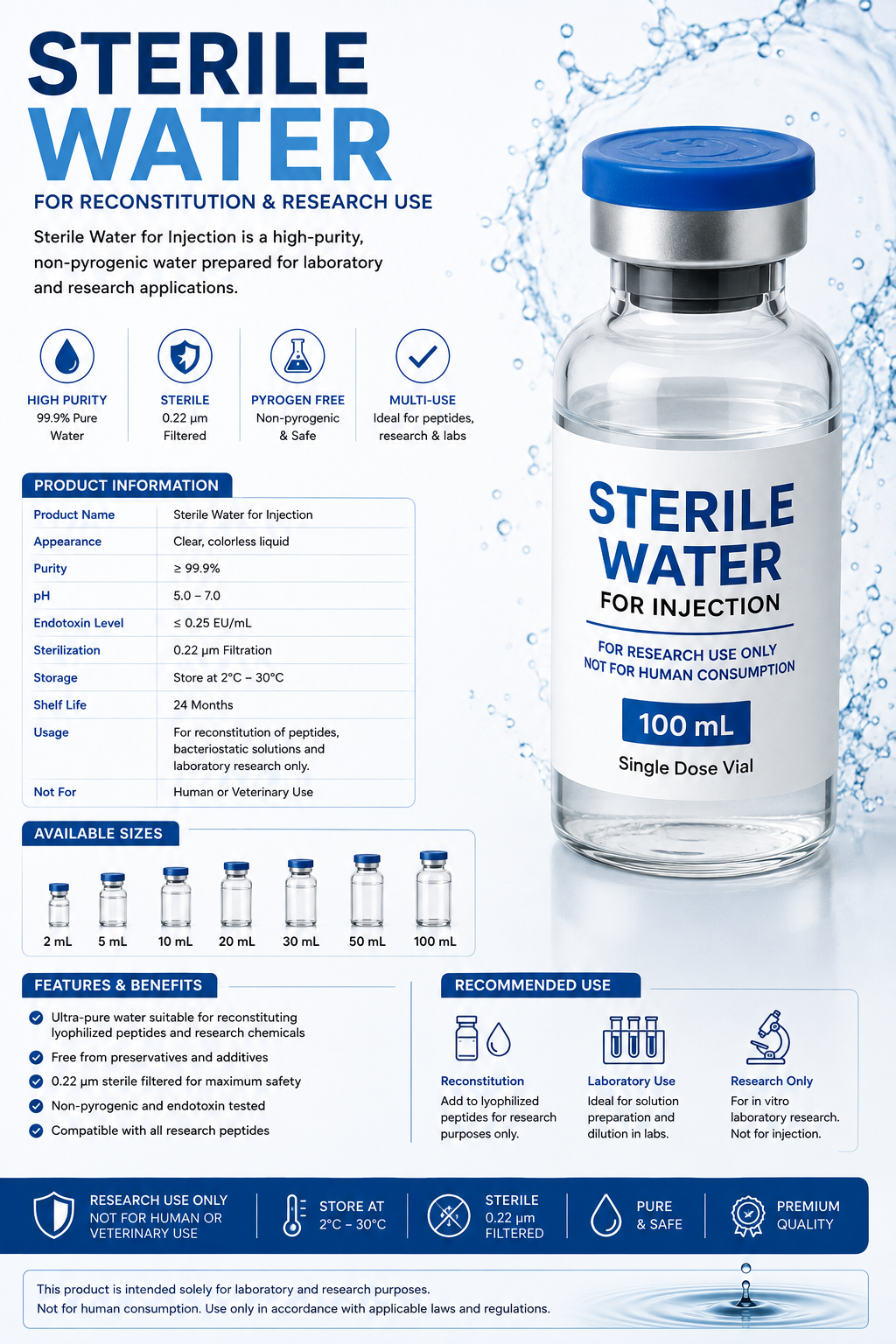
In the precise world of laboratory research, the integrity of a study often hinges on the smallest details. When working with lyophilized (freeze-dried) compounds, the choice of diluent is not merely a logistical step; it is a critical factor in maintaining molecular stability and ensuring accurate results. Among the various options available, sterile water for peptides remains one of the most fundamental tools in the researcher’s arsenal.
This guide provides an evidence-based analysis of the primary solvent used in labs, exploring its chemical properties, its role in research applications, and how it compares to other common diluents like bacteriostatic water and saline. Whether you are conducting a single-dose experiment or investigating the long-term stability of a complex molecule, understanding the nuances of your reconstitution media is essential for scientific rigor.
What is Sterile Water?
Sterile water is water that has been processed to be free of all microorganisms, including bacteria, viruses, and fungi. In a research context, it is typically produced under strict United States Pharmacopeia (USP) standards to ensure it is non-pyrogenic—meaning it does not contain endotoxins that could trigger an inflammatory response in biological models.
When researchers refer to this type of water, they are usually discussing a highly purified solvent that lacks any preservatives or additives. This purity is its greatest strength, as it ensures that no external chemicals interfere with the peptide’s primary structure or biological activity. However, this lack of preservatives also means that the water provides no protection against bacterial growth once the vial is punctured.
The Science of Reconstitution
Reconstitution is the process of returning a lyophilized peptide to its liquid state. Most research peptides are provided in a stable, freeze-dried form to extend their shelf life. When the sterile solvent is added to the vial, the water molecules surround the peptide chains, allowing them to re-fold into their bioactive conformations. Because it is a neutral solvent, it is often preferred for peptides that are sensitive to the slight acidity or chemical interactions caused by preservatives like benzyl alcohol.
Distilled Water vs Sterile Water: Why Purity Matters
One of the most common questions in the laboratory is the difference between these two types of water. While both are “purified,” they are not interchangeable in a research setting involving injectable or highly sensitive compounds. For researchers, sterile water for peptides is the preferred choice for specific applications.
Comparing these two types of water highlights the difference between chemical purity and biological sterility. Distilled water is created through the process of boiling water and condensing the steam. This effectively removes minerals and heavy metals, but it does not guarantee the absence of microorganisms or pyrogens. In contrast, the sterile variant undergoes additional sterilization processes—such as filtration through 0.22-micron membranes or heat treatment—to ensure a complete absence of life. Using distilled water in peptide research can lead to rapid degradation of the molecule due to bacterial contamination, potentially compromising the entire study.
| Feature | Distilled Water | Sterile Water (USP) |
| Microorganisms | May be present | Completely absent |
| Pyrogens/Endotoxins | Not tested | Guaranteed non-pyrogenic |
| Primary Use | General lab cleaning, humidifiers | Reconstitution, biological research |
| Safety for Injection | No | Yes (Single-dose) |
Is Bacteriostatic Water the Same as Sterile Water?
Another critical distinction for researchers is understanding the relationship between different types of medical-grade water. A frequent point of confusion is: is bacteriostatic water the same as sterile water? The short answer is no, though they share a common foundation.
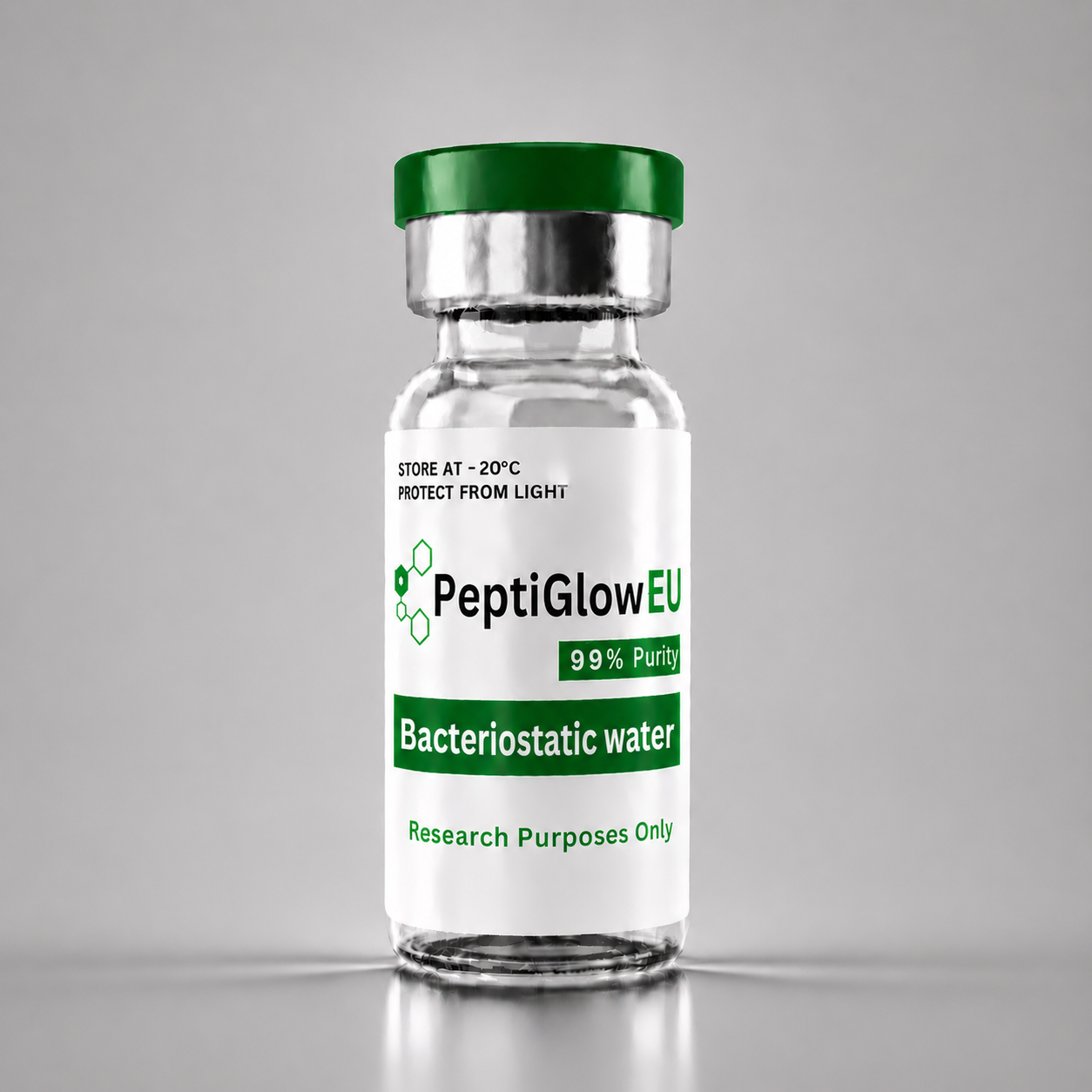
To answer this question, one must look at the additives. Bacteriostatic water is essentially sterile water that has been supplemented with 0.9% benzyl alcohol. This alcohol acts as a preservative, inhibiting the growth of bacteria and allowing the vial to be used multiple times over a period of up to 28 days. While the non-preserved version is intended for single-use and must be discarded after one puncture, bacteriostatic water is the standard for multi-dose applications.
However, the comparison also involves stability. Some peptides are chemically incompatible with benzyl alcohol, which can cause them to aggregate or degrade more quickly. In these specific cases, the pure sterile solvent is the superior choice, even if it requires more frequent vial changes.
Sterile Water for Injection: USP Standards and Research
In professional clinical and research environments, the most common form of this diluent is the high-purity injectable variant. This is a specific grade of water that meets the highest regulatory standards for safety and purity.
This grade of water is strictly regulated to ensure it has a conductivity of less than 1.3 μS/cm and a total organic carbon (TOC) count of less than 500 ppb. In peptide research, using high-purity water ensures that the results are not skewed by trace contaminants or ionic imbalances. It is important to note that this solvent is different from the version intended for washing wounds, which may not meet the same particulate matter standards required for systemic administration or sensitive cellular assays.
Benefits of High-Grade Diluents
•Maximum Stability: Lacks preservatives that might interact with sensitive peptide bonds.
•Non-Pyrogenic: Ensures no endotoxin-related interference in biological models.
•Neutral pH: Provides a stable environment for peptides that require a specific pH range for bioactivity.
Research Applications of Sterile Water for Peptides
The application of this solvent varies depending on the specific goals of the research project. While many researchers default to bacteriostatic water for convenience, there are several scenarios where the sterile variant is the mandatory choice.
1. Alcohol-Sensitive Peptide Research
Certain peptides, such as those with complex disulfide bridges or highly hydrophobic regions, can be denatured by the presence of benzyl alcohol. For these molecules, the pure solvent is used to ensure the peptide remains in its native, functional state throughout the duration of the experiment.
2. Immediate-Use Single-Dose Studies
If a research protocol requires the entire contents of a peptide vial to be used in a single session, there is no need for a preservative. In these cases, the non-preserved water is the most cost-effective and chemically “clean” option.
3. Allergic and Sensitivity Research
In studies involving animal models that may have sensitivities to preservatives, the sterile diluent is used to eliminate the risk of adverse reactions to benzyl alcohol, ensuring that the observed effects are solely due to the peptide being studied.
Comparison: Diluents and Reconstitution Media
While sterile water for peptides is a primary solvent, it is often compared to other media to determine the best fit for a specific experiment.
| Diluent Type | Preservative | Multi-Dose? | Best Use Case |
| Sterile Water | None | No | Alcohol-sensitive peptides, single-dose |
| Bacteriostatic Water | 0.9% Benzyl Alcohol | Yes | Standard multi-dose peptide research |
| Normal Saline (0.9% NaCl) | None | No | Immediate use where isotonicity is required |
| Bacteriostatic Saline | 0.9% Benzyl Alcohol | Yes | Multi-dose where isotonicity is required |
In the context of sterile water for peptides, the primary limitation is the risk of contamination. Because the water does not inhibit bacterial growth, any microorganism introduced during the reconstitution process will flourish, potentially degrading the peptide and rendering the research invalid.
Safety Considerations and Best Practices
Using these diluents requires a commitment to aseptic technique. Because there is no preservative to “catch” mistakes, the researcher must be meticulous.
1. Single-Use Protocol
The most important safety rule for this water is that it is a single-use product. Once the seal of the water vial is broken, it should be used immediately, and any remaining liquid must be discarded. Re-using a vial after 24 hours is a major risk factor for bacterial contamination.
2. Aseptic Technique
When adding the diluent to a lyophilized vial, always wipe the rubber stoppers of both vials with 70% isopropyl alcohol. Use a fresh, sterile syringe for each step of the process to maintain the sterility of the environment.
3. Temperature Sensitivity
While the water itself is stable at room temperature, the reconstituted peptide solution is often very fragile. Once the solvent has been added, the vial should typically be stored in a refrigerator at 2°C to 8°C (36°F to 46°F) to slow down the natural process of molecular degradation.
Storage and Handling of Sterile Water for Peptides
Proper storage ensures that the water remains effective until its expiration date.
•Unopened Vials: Should be stored at room temperature (20°C to 25°C) in a clean, dry environment away from direct sunlight.
•Opened Vials: Must be used immediately. Even if kept in a refrigerator, the lack of a preservative means that the liquid is not safe for multi-day use once the seal is compromised.
•Visual Inspection: Before use, always inspect the vial for clarity. If the water appears cloudy or contains visible particulates, it must be discarded.
Frequently Asked Questions (FAQs)
Can I use sterile water if I plan to use the vial for a week?
It is generally not recommended. Because the non-preserved water lacks a preservative, bacteria can grow in the vial after the first puncture. For multi-day use, bacteriostatic water is the standard choice unless the peptide is alcohol-sensitive.
How much water should I add to a 5mg vial?
The volume of water depends on the desired concentration for your research. A common practice is to add 1mL or 2mL of water to simplify the math for dosing (e.g., 5mg in 2mL results in 2.5mg per mL).
Is the injectable variant the same as distilled water?
No. As discussed earlier, distilled water is purified of minerals but not necessarily sterile or free of pyrogens, whereas the injectable variant meets strict USP standards for biological safety.
What happens if I use tap water instead of a sterile solvent?
Using tap water is a catastrophic error in peptide research. Tap water contains minerals, chlorine, and microorganisms that will immediately degrade the peptide and introduce significant variables into your study, rendering the results useless.
Conclusion
The selection of sterile water for peptides as a reconstitution medium is a decision rooted in the need for chemical purity and molecular stability. By providing a neutral, preservative-free environment, it allows researchers to study the true effects of a compound without the interference of external additives.
However, the use of this solvent also places a higher burden of care on the researcher. Without the safety net of a bacteriostatic agent, aseptic technique and a strict single-use policy become the primary defenses against contamination. Whether you are comparing distilled water vs sterile water or deciding if is bacteriostatic water the same as sterile water for your specific needs, the goal remains the same: ensuring the highest possible standards for scientific discovery. In the world of peptide research, the quality of your water is just as important as the quality of your molecule.
Image Suggestions & Alt Text
1.Infographic: SWFI vs BWFI Comparison – Alt Text: A comparison chart showing the differences between the injectable variant and bacteriostatic water, highlighting preservatives and usage.
2.Diagram: The Reconstitution Process – Alt Text: A step-by-step diagram showing how to add the sterile solvent to a lyophilized vial using aseptic technique.
3.Photo: Professional Lab Reconstitution Setup – Alt Text: A researcher in a lab setting preparing to use a high-grade diluent to reconstitute a research peptide.
Suggested Internal Links
•Bacteriostatic Water 101: Everything Researchers Need to Know
•How to Store Research Peptides for Maximum Longevity
•The Importance of Aseptic Technique in Peptide Research
•Understanding USP Standards for Laboratory Diluents
•Common Mistakes in Peptide Reconstitution and How to Avoid Them
Authoritative External References
1.United States Pharmacopeia (USP): Sterile Water for Injection Standards
2.FDA: Guidance on Sterile Drug Products Produced by Aseptic Processing
3.Journal of Pharmaceutical Sciences: Stability of Lyophilized Peptides in Various Solvents
4.CDC: Guidelines for Environmental Infection Control in Health-Care Facilities (Water)
5.DailyMed: Bacteriostatic Water for Injection, USP Labeling