
Blog
Retatrutide Dosing

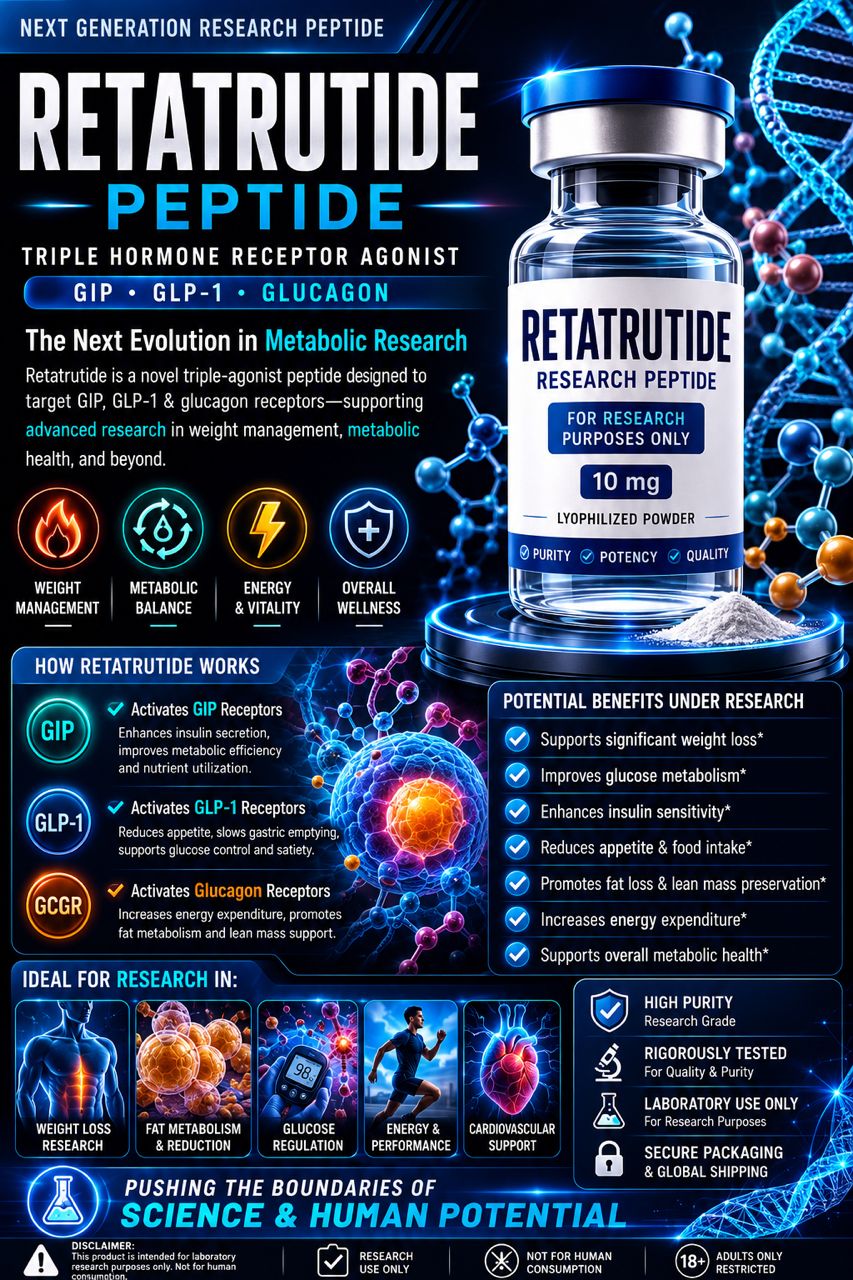
Check out Retatrutide dosing. Retatrutide has become one of the most talked-about names in obesity medicine — and for good reason. Phase 3 results released in 2026 showed weight loss approaching what’s typically seen with bariatric surgery. But it’s important to be precise from the outset: retatrutide is not FDA-approved. It remains an investigational drug, available only to participants enrolled in Eli Lilly’s authorized clinical trials. It is not available by prescription, through compounding pharmacies, or through any commercial vendor, and we won’t be covering dosing protocols or sourcing — those decisions belong entirely inside a regulated clinical trial, under physician supervision.
This article focuses on what the published research actually shows: how retatrutide works, what the Phase 2 and Phase 3 trial data demonstrated (including the specific doses studied, as historical trial information), the side effects reported, how it compares to tirzepatide and Ozempic, and where things stand on the path to approval.
What Is Retatrutide?
Retatrutide is a once-weekly injectable peptide developed by Eli Lilly. It’s classified as a triple hormone receptor agonist, meaning it activates three separate metabolic receptors at once:
- GLP-1 receptor – reduces appetite, slows gastric emptying, supports insulin response
- GIP receptor – the same target used by tirzepatide; enhances insulin secretion and may improve tolerability
- Glucagon receptor (GCGR) – increases energy expenditure and promotes fat mobilization in the liver
This three-target mechanism is what distinguishes retatrutide from earlier-generation drugs. Semaglutide (Ozempic/Wegovy) targets only GLP-1. Tirzepatide (Mounjaro/Zepbound) targets GLP-1 and GIP. Retatrutide is the first drug in late-stage development to combine all three pathways — part of why researchers describe it as a “first-in-class” triple agonist. Check out Retatrutide dosing. Retatrutide has become one of the most talked-about names in obesity medicine at collagenpeptideseu.
Retatrutide Phase 2 and Phase 3 Trial Results
The clinical data is the most important part of the retatrutide benefits conversation, so it’s worth walking through the actual published trial findings.
Phase 2 (published in the New England Journal of Medicine, 2023): Participants with obesity lost up to 24.2% of body weight at 48 weeks on the highest studied dose — a result that, at the time, surpassed what had been reported for semaglutide or tirzepatide in their respective trials at similar timepoints. The same Phase 2 program also found striking liver effects: an 86% reduction in liver fat, with the large majority of participants reaching normal liver fat levels by 48 weeks.
Phase 3 TRIUMPH-4 (reported December 2025): In adults with obesity and knee osteoarthritis, participants on the highest studied dose lost an average of 28.7% of body weight (roughly 32 kg / 71 lbs) at 68 weeks — the program’s first successful Phase 3 readout.
Phase 3 TRIUMPH-1 (reported May 2026): This larger, pivotal trial enrolled 2,339 participants with obesity or overweight and at least one weight-related condition. At 80 weeks, average weight loss across the studied dose tiers ranged from roughly 17.6% at the lowest dose to 25.0% at the highest dose, compared with 3.9% on placebo — confirming the magnitude and consistency of the TRIUMPH-4 results in a second, larger population.
TRANSCEND-T2D-1 (March 2026): In participants with type 2 diabetes, the highest studied dose produced average weight loss of 16.8% at 40 weeks — a smaller figure than the non-diabetic obesity trials, consistent with a pattern seen across this entire drug class (weight loss tends to be more modest in people with type 2 diabetes).
Eli Lilly has stated that seven additional Phase 3 readouts are expected throughout 2026, covering type 2 diabetes, obstructive sleep apnea, MASLD (fatty liver disease), and cardiovascular outcomes — meaning the full picture of retatrutide’s benefits is still being assembled.
Retatrutide Dosing: Understanding Proper Administration
One of the most frequently searched topics is Retatrutide dosing.
Because Retatrutide remains under clinical investigation, dosing protocols may vary depending on research objectives and physician guidance.
Retatrutide Starting Dose
The Retatrutide starting dose is typically introduced conservatively to minimize gastrointestinal side effects.
Many clinical protocols begin with:
1 mg weekly
Gradual titration over several weeks
Starting slowly helps the body adapt to the medication and may reduce nausea and digestive discomfort.
Retatrutide Dosage Chart
Below is an example of a commonly discussed Retatrutide dosage chart used in research settings:
Week
Retatrutide Dosage 1–4
1 mg weekly 5–8
2 mg weekly 9–12
4 mg weekly 13–16
8 mg weekly 17+
Up to 12 mg weekly
This Retatrutide dosage chart is for educational purposes only and should not replace professional medical advice.
Retatrutide Dosing Schedule
A typical Retatrutide dosing schedule involves:
One subcutaneous injection per week
Consistent administration on the same day each week
Gradual dose escalation based on tolerance
Following a structured Retatrutide dosing schedule may help optimize results while minimizing adverse effects. Retatrutide Dosing Guide: Maximize Weight Loss Results with the Right Dosage
Retatrutide Dosage Calculator or Check out Retatrutide dosing. Retatrutide has become one of the most talked-about names in obesity medicine at collagenpeptideseu.
Many individuals search for a Retatrutide dosage calculator to determine injection volumes after reconstitution.
The exact calculation depends on:
Vial concentration
Amount of bacteriostatic water added
Desired weekly dose
Example:
If a 10mg vial is mixed with 2ml of bacteriostatic water: Concentration = 5mg/ml
To administer 1mg: Injection volume = 0.2ml
A Retatrutide dosage calculator can simplify these conversions and reduce dosing errors.
How Long Will 10mg of Retatrutide Last?
Another common question is:
How long will 10mg of Retatrutide last?
The answer depends entirely on the selected dose.
Examples:
1mg weekly = 10 weeks
2mg weekly = 5 weeks
5mg weekly = 2 weeks
10mg weekly = 1 week
Understanding your planned dosage helps determine how long a 10mg vial may last.
Retatrutide Side Effects
As with every drug in the GLP-1/GIP/glucagon class, the safety profile is dominated by gastrointestinal effects. In the TRIUMPH-1 Phase 3 trial, Eli Lilly reported the following adverse event rates by dose group (compared with placebo):
- Nausea: roughly 29–42% across the studied dose tiers, vs. about 15% on placebo
- Diarrhea: roughly 25–34% across dose tiers, vs. placebo
- These effects were generally most pronounced during the dose-escalation period and tended to ease over time, consistent with the broader incretin drug class
Discontinuation due to side effects has varied between trials — TRIUMPH-1 reported an 11.3% discontinuation rate, while TRIUMPH-4 reported a higher 18.2% rate, suggesting tolerability may vary by population and trial design. Some research has also flagged a dysesthesia (tingling sensation) signal as an area warranting continued monitoring across this drug class, not unique to retatrutide alone.
Because retatrutide is still in active trials, its long-term safety profile beyond the current trial windows (up to 80 weeks so far) isn’t yet established. This is one of the key reasons full approval is still pending.
Retatrutide vs Tirzepatide
This comparison is one of the most searched in the space, and the published numbers are genuinely striking:
| Retatrutide | Tirzepatide | |
|---|---|---|
| Receptor targets | GLP-1, GIP, Glucagon (triple) | GLP-1, GIP (dual) |
| Reported weight loss | Up to ~28.7% (68–80 weeks) | Up to ~20.9% (72 weeks, SURMOUNT) |
| Approval status | Investigational; Phase 3 (TRIUMPH program) | FDA-approved (Zepbound/Mounjaro) |
| Adverse event rate | Higher, dose-dependent | Lower than retatrutide in comparative analyses |
A 2025 network meta-analysis comparing tirzepatide and retatrutide found that retatrutide produced statistically greater weight reduction, but with a notably higher frequency of adverse events. In other words: the efficacy edge appears real, but it comes with a tolerability tradeoff that current research is still characterizing. The two drugs have not been studied in a single direct randomized head-to-head trial — these are cross-trial comparisons, which carry inherent limitations.
Retatrutide vs Ozempic
Ozempic (semaglutide) is a single-target GLP-1 receptor agonist, the earliest of the three drugs discussed here to reach the market. Where Ozempic produced average weight loss in the range of 9–15% in its major trials, retatrutide’s triple-agonist mechanism has produced roughly double that figure in comparable trial timeframes. The mechanistic difference — one receptor target versus three — is the most likely explanation, though, again, no completed head-to-head trial exists between the two drugs specifically.
It’s also worth noting that semaglutide has the longest real-world safety track record of any drug in this category, having been used by millions of patients over several years — a maturity of safety data that retatrutide, as an investigational compound, simply doesn’t have yet.
Retatrutide FDA Approval Status: When Might It Be Available?
As of mid-2026, retatrutide has not been submitted for FDA approval. Based on Eli Lilly’s current trial timeline, an NDA (New Drug Application) submission is anticipated in late 2026, following completion of the broader TRIUMPH Phase 3 program. Industry analysts have suggested a realistic approval window of late 2027 to early 2028, assuming the remaining trial readouts continue to support the drug’s safety and efficacy case — though regulatory timelines can shift, and nothing is guaranteed until the FDA completes its review.
Until that approval happens, retatrutide remains available only to people enrolled in an authorized Eli Lilly clinical trial. Any product marketed online as “retatrutide” outside that framework — including so-called “research peptide” vendors — is an unregulated product, not the substance studied in these trials, and carries real risk: it may be mislabeled, contaminated, dosed incorrectly, or not contain retatrutide at all.
Check out Retatrutide dosing. Retatrutide has become one of the most talked-about names in obesity medicine at collagenpeptideseu.
Retatrutide Before and After Results
Interest in Retatrutide before and after transformations has grown rapidly due to impressive outcomes reported in clinical studies.
Many participants experienced:
Significant body weight reduction
Smaller waist circumference
Improved metabolic markers
Better blood glucose management
Enhanced quality of life
Actual Retatrutide before and after results vary depending on:
Starting weight
Diet
Exercise habits
Dose protocol
Individual response
Combining Retatrutide dosing with healthy nutrition and lifestyle habits generally produces the best outcomes.
Retatrutide How to Get
One of the most searched phrases online is Retatrutide how to get.
Because regulatory status varies by country, availability differs significantly across regions.
Individuals interested in obtaining Retatrutide should:
Consult a licensed healthcare professional
Verify local regulations
Purchase only from reputable and transparent sources
Ensure product quality and testing standards
Research peptides should always be handled responsibly and in accordance with local laws.
Where to Get Retatrutide
When researching where to get Retatrutide, quality and authenticity should be top priorities.
Important considerations include:
Third-party testing
Product purity verification
Reputable supplier history
Proper storage and shipping practices
Customer support availability
Choosing reliable suppliers helps ensure product integrity and consistency. Get now at collagenpeptideseu.com .
Retatrutide Kaufen: Growing Interest in Europe
Searches for Retatrutide kaufen have increased substantially across Germany and other European markets.
As awareness of advanced weight-loss peptides grows, more individuals are researching:
Retatrutide kaufen Deutschland
Retatrutide kaufen Europa
Retatrutide peptide suppliers
Consumers should always verify supplier credibility and review applicable regulations before purchasing.
Why Retatrutide Is Gaining Global Attention
The growing popularity of Retatrutide stems from its unique triple-agonist mechanism and promising clinical outcomes.
Potential advantages include:
Greater weight loss potential
Improved appetite control
Enhanced fat metabolism
Better metabolic health markers
Convenient weekly dosing
As ongoing research continues, Retatrutide may become one of the most significant advancements in obesity and metabolic health treatment.
Check out Retatrutide dosing. Retatrutide has become one of the most talked-about names in obesity medicine at collagenpeptideseu.
Frequently Asked Questions
Is retatrutide FDA approved? No. As of mid-2026, retatrutide is investigational and only available within authorized clinical trials. FDA submission is expected in late 2026, with potential approval not anticipated before late 2027 at the earliest.
How much weight can retatrutide help you lose? In Phase 3 trials, participants on the highest studied dose lost an average of 25–28.7% of body weight over 68–80 weeks, compared with under 4% on placebo. Individual results in any future approved use would depend on dose, duration, and individual factors.
What are the main retatrutide side effects? Primarily gastrointestinal: nausea and diarrhea were the most common adverse events reported in Phase 3 trials, generally most pronounced during dose escalation.
Is retatrutide better than tirzepatide? Trial data suggests greater average weight loss with retatrutide, but also a higher rate of adverse events. No direct head-to-head trial between the two exists yet, so this remains a comparative — not definitive — conclusion.
Can you get retatrutide right now? Only through enrollment in an authorized Eli Lilly clinical trial. It is not available by prescription or through any commercial vendor, and products claiming otherwise are not the regulated substance studied in trials.
The Road Ahead
Retatrutide’s trial results so far represent one of the strongest efficacy signals seen in obesity medicine to date, with two large Phase 3 trials now confirming the magnitude of weight loss first suggested in Phase 2. Seven more Phase 3 readouts are expected through the rest of 2026, covering everything from type 2 diabetes to sleep apnea and liver disease — meaning the full risk-benefit picture, and the path to eventual approval, will keep evolving over the next year or two.
Metabolic and weight-management research increasingly intersects with broader questions of body composition, tissue health, and recovery during periods of rapid weight change. If you’re interested in the wider research landscape around metabolic health and tissue support, collagenpeptideseu.com covers the evidence behind collagen peptides and their role in skin elasticity and joint support — a relevant complement to research on rapid-weight-loss therapies, where skin and connective tissue changes are an active area of patient interest.
This article is for informational and research purposes only and does not constitute medical advice. Retatrutide is investigational and not approved for human use outside authorized clinical trials. Always consult a licensed healthcare provider regarding any treatment decisions.