
Blog
KLOW Peptide Blend: Benefits, Components, and How It Compares to GLOW

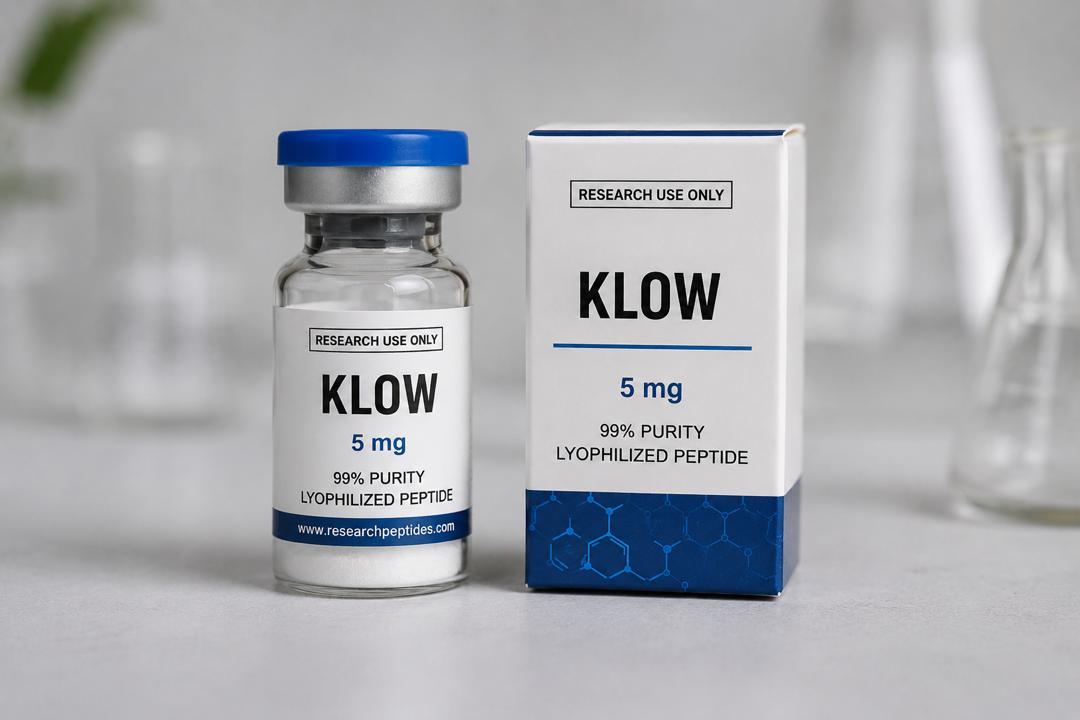
Looking for KLOW Peptide Blend? If you’ve been exploring the world of regenerative peptide therapy, you’ve likely come across KLOW — one of the most talked-about multi-peptide blends in functional and aesthetic medicine right now. Designed as a comprehensive healing and recovery stack, the KLOW peptide brings together four of the most well-researched regenerative peptides into a single, synergistic formulation. But what exactly is KLOW, how does it differ from the similar GLOW blend, and what does the underlying science actually show?
This guide covers all of it — the composition of the KLOW blend peptide, how each component works, the documented benefits from preclinical research, how KLOW compares to GLOW, what the KLOW 80 formulation means, and what to consider before exploring peptide therapy with a qualified provider.
What Is KLOW? The Four-Peptide Complex Explained
KLOW Peptide Blend is a precision-formulated quad-peptide complex combining BPC-157, GHK-Cu, TB-500, and KPV — each selected for a distinct, complementary role in tissue repair, inflammation regulation, collagen synthesis, and cellular regeneration. The name itself is derived from the initials of its components: KPV, Lifted from BPC-157’s tissue-repair role, Origin from GHK-Cu (Copper), and Wound healing from TB-500 (Thymosin Beta-4).
The standard KLOW 80 formulation comes as an 80mg lyophilized vial, with each component present in the following research-studied ratio:
- GHK-Cu: 50mg — the largest portion, reflecting its role as the foundational collagen and regeneration signal
- BPC-157: 10mg — the repair specialist, particularly for musculoskeletal and gastrointestinal tissue
- TB-500: 10mg — the cell-migration coordinator, derived from Thymosin Beta-4
- KPV: 10mg — the anti-inflammatory controller, a tripeptide derived from alpha-MSH
This fixed-ratio formulation allows every reconstituted dose to deliver the same blend of components — one of the practical advantages of a pre-mixed blend for researchers and clinicians versus managing four separate compounds. want to know more about what is KLOW Peptide Blend? checkout
How Each Component Works
Understanding the KLOW peptide benefits starts with understanding what each of the four peptides does, and how they layer together.
BPC-157 — The Repair Engine
BPC-157 (Body Protective Compound 157) is a pentadecapeptide originally derived from gastric juices. It is one of the most extensively studied peptides in preclinical research for tissue healing, with documented activity in tendon, ligament, muscle, and gut repair models. BPC-157 promotes healing partly through VEGF (vascular endothelial growth factor) upregulation, improving the formation of new blood vessels in damaged tissue — a process called angiogenesis — which is critical for delivering nutrients and repair signals to injured areas. Within KLOW, BPC-157 functions as the primary repair engine, accelerating recovery in tissue that is otherwise slow to heal, such as tendons and ligaments. Looking for more info on klow peptide benefits? check out at collagenpeptideseu.
GHK-Cu — The Collagen Architect
GHK-Cu (Copper Tripeptide-1) is a naturally occurring copper-binding peptide found in human plasma, saliva, and urine. It is one of the most extensively documented regenerative peptides in dermatological and regenerative research — with over four decades of published study. GHK-Cu levels decline significantly with age: from approximately 200 ng/ml in early adulthood to around 80 ng/ml by age 60, a drop that correlates with slower healing and visible tissue degeneration.
In research models, GHK-Cu has been shown to influence thousands of genes involved in repair, reduce inflammatory cytokine release, stimulate collagen and elastin production, and support wound remodeling with less scarring. Within KLOW, GHK-Cu serves as the architectural signal — directing tissues to rebuild and remodel correctly at the cellular level. It is also the component most responsible for the skin rejuvenation benefits reported in KLOW research.
TB-500 — The Logistics Coordinator
TB-500 is a synthetic fragment of Thymosin Beta-4, a peptide involved in cell movement, angiogenesis, and tissue repair. It works primarily by modulating actin — the protein involved in cell migration — which helps repair cells move efficiently to the site of injury. TB-500 also supports the formation of new blood vessels and has been studied for its role in reducing inflammation and fibrosis during healing. In the KLOW blend, TB-500 acts as the logistics coordinator: ensuring that repair cells arrive where they’re needed and that tissue remodels cleanly rather than forming excessive scar tissue.
KPV — The Inflammation Controller
KPV is a short tripeptide (Lys-Pro-Val) derived from the C-terminal end of alpha-melanocyte stimulating hormone (α-MSH). It is notable for working at nanomolar concentrations — extremely small amounts — and for its ability to translocate directly to the cell nucleus, where it blocks NF-κB, the master regulator of inflammatory signaling.
Research in animal models of colitis and other inflammatory conditions has found KPV effective at reducing mucosal inflammation and supporting gut barrier integrity. For skin, KPV has been studied for reducing localized inflammation and protecting against oxidative damage. KPV is the component that differentiates KLOW from its predecessor blend, GLOW — and it’s arguably the most targeted anti-inflammatory in the stack.
KLOW Peptide Benefits: What the Research Suggests
The documented research on each individual component, and the growing body of clinical observation from functional medicine providers, suggests the following potential benefits of the KLOW blend:
Accelerated musculoskeletal recovery. BPC-157 and TB-500 both demonstrate faster healing timelines in tendon, ligament, and muscle injury research models. When studied together, the effect appears additive rather than redundant — addressing both the repair signal and the cellular logistics of healing simultaneously.
Collagen synthesis and skin rejuvenation. GHK-Cu is one of the most extensively documented copper peptides for collagen synthesis and dermal remodeling. Published research has shown improvements in skin density, texture, elasticity, and reduction of fine lines in models using GHK-Cu, making it a standout ingredient for skin-focused applications of the KLOW blend. klow peptide for skin rejuvenation.
Gut health and mucosal repair. BPC-157 was originally discovered in gastric tissue, and its gut-protective properties are among its most replicated research findings. KPV adds complementary gut-barrier support through anti-inflammatory pathways, making KLOW particularly relevant for applications involving gut lining health or gastrointestinal inflammation.
Systemic anti-inflammatory effects. KPV and BPC-157 both modulate cytokine signaling and inflammatory pathways, providing complementary anti-inflammatory effects across multiple tissue types — systemic rather than localized.
Wound healing and reduced scarring. The combination of angiogenic support (BPC-157, GHK-Cu), cell-migration enhancement (TB-500), and inflammation modulation (KPV) addresses multiple distinct stages of the wound-healing cascade simultaneously, supporting more organized tissue repair and reduced fibrosis.
Post-procedure skin recovery. GHK-Cu’s collagen-stimulating and anti-inflammatory properties, combined with KPV’s targeted cytokine modulation, have made this combination of particular interest in aesthetic and post-procedure recovery research contexts. KLOW Peptide Benefits
KLOW vs GLOW Peptide: What’s the Difference?
The difference between GLOW and KLOW peptides is a single component: KPV.
The GLOW peptide is a three-peptide blend containing GHK-Cu, BPC-157, and TB-500 — a well-established regenerative trio. The KLOW peptide builds on GLOW by adding KPV, the potent anti-inflammatory tripeptide derived from α-MSH.
| Feature | GLOW Peptide | KLOW Peptide |
|---|---|---|
| Components | GHK-Cu, BPC-157, TB-500 | GHK-Cu, BPC-157, TB-500 + KPV |
| Anti-inflammatory depth | BPC-157 provides some anti-inflammatory activity | KPV adds targeted NF-κB inhibition as a fourth pathway |
| Gut health focus | BPC-157 supports gut lining | BPC-157 + KPV provide complementary gut mucosal support |
| Inflammation control | Moderate | Enhanced, with dual-pathway modulation |
| Best suited for | General tissue repair and skin rejuvenation | More complex inflammatory or gut-related recovery contexts |
In practice, KLOW vs GLOW comes down to the depth of anti-inflammatory and gut-healing coverage you need. GLOW is a strong foundational regenerative blend; KLOW adds KPV’s potent immune-modulating mechanism on top of that foundation, making it the broader and more comprehensive of the two.
Who Is KLOW Peptide For?
Based on the research profiles of its four components, KLOW is most relevant in clinical and research contexts involving:
- Athletes and active individuals seeking faster recovery from training load, soft tissue injuries, or post-surgical repair
- Individuals managing chronic inflammation or autoimmune-related tissue damage, where the KPV component’s NF-κB modulation may be particularly relevant
- People interested in skin rejuvenation and collagen-support applications, driven by GHK-Cu’s well-documented dermal research
- Gut health applications, where BPC-157 and KPV provide complementary mucosal repair and anti-inflammatory pathways
- Post-procedure recovery, including aesthetic procedures where organized tissue remodeling and reduced inflammation are priorities
It’s important to note that KLOW (Klow vs Glow) is offered through licensed functional medicine clinics, compounding pharmacies, and med spas under physician supervision — not as an over-the-counter supplement. The components of KLOW (particularly BPC-157 and TB-500) are not FDA-approved for disease treatment. When administered, KLOW should be done within a supervised clinical context, with a qualified provider reviewing your health history and confirming candidacy.
KLOW Peptide Dosage: A Note on Clinical Protocols
KLOW dosage protocols are determined by licensed providers based on individual patient assessment, treatment goals, and health history. Because KLOW is a compounded formulation administered under physician supervision, there is no one-size-fits-all dosage — and self-administration outside a clinical framework is not appropriate or safe. If you’re considering KLOW therapy, a consultation with a licensed provider trained in peptide therapy is the right starting point.
A Word on Quality and Sourcing
Because KLOW is a compounded multi-peptide blend, quality matters significantly. Key indicators of a reputable source include batch-specific Certificates of Analysis (COA), third-party HPLC/MS testing confirming purity of at least 99%, certified endotoxin-free status (bacterial endotoxins can cause immune reactions), and dispensing through a licensed compounding pharmacy. Any provider offering KLOW should be willing to share documentation for the specific batch you’re receiving — not generic or placeholder certificates.
KLOW and Collagen: A Complementary Picture
GHK-Cu’s collagen-stimulating mechanism within KLOW connects naturally to the broader field of collagen peptide research, where the focus is on supporting the body’s structural protein systems through targeted supplementation. Whether through topical or systemic approaches, the intersection of regenerative peptides and collagen biology is one of the most active areas in skin, joint, and connective tissue research today. If you’re researching the broader evidence base around collagen peptides and their role in skin elasticity, joint support, and tissue repair, collagenpeptideseu.com is a solid resource for the underlying science — a complementary angle to the regenerative peptide research covered in this guide.
Frequently Asked Questions
What is the KLOW peptide blend? KLOW is an 80mg quad-peptide complex combining GHK-Cu (50mg), BPC-157 (10mg), TB-500 (10mg), and KPV (10mg), formulated to support tissue repair, inflammation control, collagen synthesis, and cellular regeneration through four complementary biological pathways.
What is the difference between GLOW and KLOW peptides? GLOW contains three peptides (GHK-Cu, BPC-157, TB-500). KLOW adds a fourth — KPV — a potent anti-inflammatory tripeptide that provides NF-κB inhibition and additional gut-health support, making KLOW the more comprehensive anti-inflammatory formulation of the two.
What are the main KLOW peptide benefits? Preclinical research on KLOW’s components supports benefits including accelerated musculoskeletal recovery, collagen and skin rejuvenation, gut mucosal repair, systemic anti-inflammatory effects, and improved wound healing with reduced scarring.
Is KLOW FDA approved? The individual components of KLOW are not FDA-approved for disease treatment. KLOW is a compounded peptide blend intended for use under the supervision of a licensed medical professional in clinical or research contexts.
How does KLOW compare to single-peptide approaches? The multi-pathway design of KLOW means it addresses several stages of the healing cascade simultaneously — repair signaling (BPC-157), cell migration (TB-500), collagen architecture (GHK-Cu), and inflammation control (KPV) — rather than targeting a single mechanism. This is the core rationale for the blend approach over individual peptide use.
This article is for informational and educational purposes only and does not constitute medical advice. KLOW is a compounded peptide formulation intended for use under the supervision of a licensed healthcare provider. Always consult a qualified medical professional before beginning any peptide therapy.