
Cagrilintide Peptide: What Researchers Need to Know.
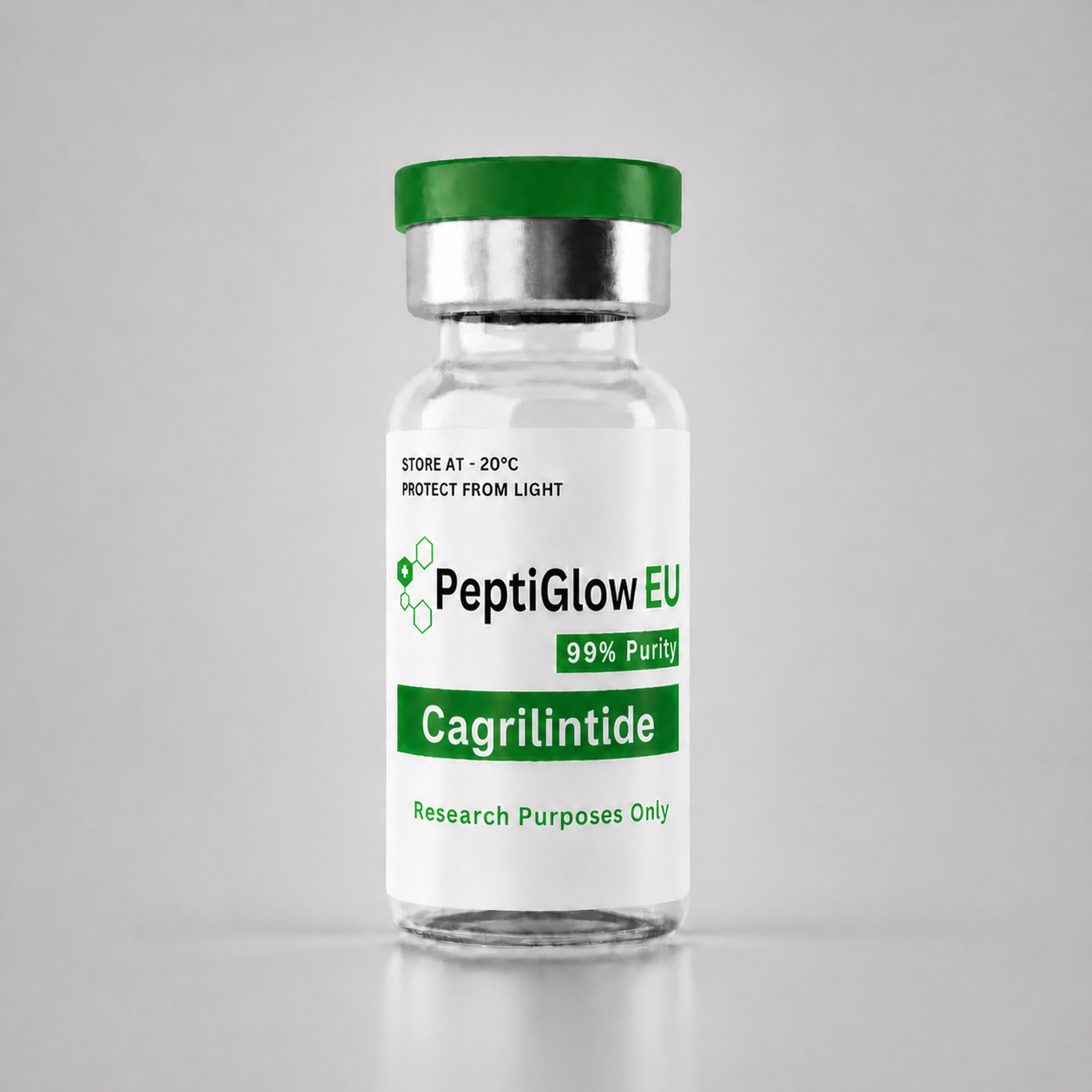
Looking to Buy Cagrilintide peptide for research use? Cagrilintide has become one of the most closely watched peptides in metabolic research over the past few years, largely due to its role as a long-acting amylin analog studied alongside GLP-1 receptor agonists. If you’ve been searching for cagrilintide peptide for sale or trying to compare it against newer multi-agonist compounds like Retatrutide, this guide breaks down what the peptide is, how it’s positioned in current research, and what to look for before you buy.
This page is written for informational and research-sourcing purposes only. Cagrilintide peptide available through Collagen Peptides EU is sold strictly for laboratory and research use — not for human consumption, self-administration, or clinical treatment of any kind.
What Is Cagrilintide?
Cagrilintide is a long-acting synthetic analog of amylin, a hormone naturally co-secreted with insulin by pancreatic beta cells. In its native form, amylin plays a role in regulating gastric emptying, suppressing glucagon secretion, and contributing to satiety signaling. Cagrilintide was engineered to mimic these actions while extending the molecule’s half-life dramatically through fatty acid acylation and albumin-binding modifications — the same general design strategy used in long-acting GLP-1 analogs like semaglutide.
Because of this extended half-life, Cagrilintide has become a frequent subject in research examining once-weekly dosing models, particularly in studies pairing it with GLP-1 receptor agonists to investigate combined effects on appetite regulation and metabolic markers. This dual-hormone research angle — amylin agonism plus GLP-1 agonism — is one of the main reasons search interest in buy Cagrilintide peptide has climbed steadily as more combination-therapy data gets published.
Cagrilintide’s Role in Combination Peptide Research
Most of the published research interest in Cagrilintide doesn’t look at it in isolation — it’s almost always discussed in the context of co-administration. The most cited example is CagriSema, an investigational combination of Cagrilintide and semaglutide studied for its effects on body weight beyond what either compound achieves independently.
The rationale behind this pairing is structural: amylin and GLP-1 act on different receptor systems but produce overlapping downstream effects on appetite and gastric motility. Research models exploring this combination are testing whether activating both pathways simultaneously produces additive or synergistic results compared to single-agent approaches. This is a major reason Cagrilintide shows up so often in literature reviews and why so many researchers searching cagrilintide peptide for sale are specifically sourcing it for combination-protocol studies rather than standalone research.
Cagrilintide vs. Retatrutide: Comparing Two Different Mechanisms
One of the most common comparisons in this space is Cagrilintide vs Retatrutide, and it’s an important distinction to understand because the two peptides work through entirely different receptor pathways.
Cagrilintide is an amylin receptor agonist. Its research profile centers on:
- Slowing gastric emptying
- Suppressing glucagon secretion
- Amplifying satiety signaling, particularly when studied alongside GLP-1 agonists
Retatrutide, by contrast, is a triple agonist — it targets GLP-1, GIP, and glucagon receptors simultaneously. Its research profile is built around a broader mechanism that touches multiple metabolic pathways at once, which is why some published data describes more pronounced effects on body weight in trial populations compared to single- or dual-mechanism compounds.
The practical difference for researchers:
- Cagrilintide is typically studied as a complementary compound, often paired with a GLP-1 agonist rather than used alone.
- Retatrutide is studied as a standalone multi-pathway agonist, with research interest centered on whether hitting three receptor systems at once outperforms combination approaches using single-mechanism peptides.
Neither compound is a direct substitute for the other in a research context — they’re investigating overlapping outcomes (appetite, weight, metabolic markers) through structurally distinct mechanisms. Anyone designing a comparative study should look closely at which receptor pathways are actually relevant to their hypothesis before choosing between them.
Cagrilintide Dosage: Why This Isn’t a Product-Page Decision
A significant share of search traffic around this compound involves Cagrilintide peptide dosage — understandably, since dosing is central to any research design. However, this is precisely the kind of variable that shouldn’t be standardized through generic product content.
Published research on Cagrilintide has used a range of doses across different study phases and objectives, and the appropriate amount for any given protocol depends entirely on the specific research question, study duration, and whether the compound is being investigated alone or in combination with another agent. Treating a single dosage figure as universally applicable would misrepresent how varied the actual literature is.
If your research requires dosage parameters, that decision should be made in consultation with a qualified advisor overseeing your specific protocol, or derived directly from peer-reviewed study designs relevant to your research question — not generalized from marketing copy. Reputable suppliers will provide concentration and purity data so you can calculate accurately within your own protocol, but the dosage decision itself sits outside what a product description can responsibly dictate.
What to Look for When You Buy Cagrilintide Peptide
The peptide research market has grown quickly, and not every supplier offering Cagrilintide peptide for sale holds to the same standard. Before purchasing from anyone, check for:
- Third-party lab verification. A certificate of analysis (COA) confirming purity and exact peptide content should be available, not just claimed.
- Accurate concentration labeling. Listings should specify exact peptide mass per vial — vague claims are a red flag.
- Proper storage and handling disclosure. Cagrilintide, like most peptides, requires controlled storage conditions; sellers should be transparent about this.
- Explicit research-use terms. Legitimate suppliers will clearly state the product is sold for laboratory research only.
- Batch-specific documentation, not generic stock images or copy-pasted purity claims reused across multiple product listings.
Collagen Peptides EU provides documented batch testing and clear concentration data for its Cagrilintide listings, which is the baseline anyone should expect before they buy Cagrilintide peptide from any source.
Why Sourcing Quality Matters More With Newer Peptides
Cagrilintide is a relatively newer compound compared to established research peptides, which means the supplier landscape hasn’t fully matured yet. That creates more room for inconsistent quality, mislabeled concentrations, and synthesis errors than you’d typically see with peptides that have been manufactured at scale for years.
This makes due diligence more important, not less. When you’re comparing options for Cagrilintide peptide for sale, prioritize suppliers who publish their own testing data over those who simply describe the compound’s mechanism and leave purity claims unverified. A peptide’s theoretical research value is irrelevant if the actual vial doesn’t match its label.
Sourcing Cagrilintide for Comparative Research
If your work involves directly comparing Cagrilintide against other metabolic peptides — Retatrutide, semaglutide, tirzepatide, or earlier amylin analogs like pramlintide — consistency across your research materials matters as much as the comparison itself. Sourcing all compounds from a single, well-documented supplier reduces variability that has nothing to do with your actual research question, such as inconsistent purity between batches from different vendors.
Collagen Peptides EU carries Cagrilintide alongside other metabolic and GLP-1-adjacent peptides commonly used in comparative research, which can simplify sourcing logistics for multi-compound study designs.
Why Researchers Choose Collagen Peptides EU for Cagrilintide
For anyone evaluating where to buy Cagrilintide peptide, the priority should be verifiable data over price or marketing language. Collagen Peptides EU offers:
- Independently tested Cagrilintide with published purity data
- Clear concentration labeling on every batch
- Transparent, research-only terms of sale
- Documentation suitable for comparative or combination-protocol research
- Consistent quality standards across its broader peptide catalog, useful for researchers running multi-compound studies
Whether you’re investigating Cagrilintide as a standalone amylin agonist, studying it in combination protocols, or working through a comparative analysis against Retatrutide, the fundamentals of a good purchase decision stay the same: verified purity, accurate labeling, and a supplier who treats documentation as a baseline requirement rather than an upsell.
Browse Cagrilintide Peptide at Collagen Peptides EU →
This content is provided for informational and research-sourcing purposes only. Cagrilintide peptide is sold strictly for laboratory and research use. It is not intended for human consumption, clinical use, or self-administration. Consult a licensed professional or refer to peer-reviewed research protocols for any guidance related to dosage, administration, or study design.
| Please select a size | 5mg (10 vials), 10mg (10 vials) |
|---|